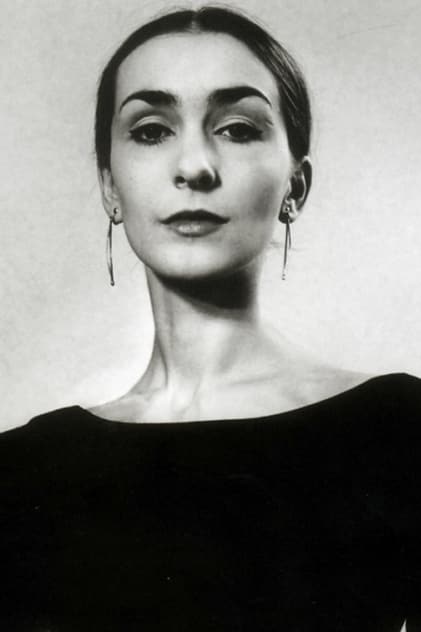
Pina Bausch

Pina Bausch

Philippine "Pina" Bausch (27 July 1940 – 30 June 2009) was a German dancer and choreographer who was a significant contributor to a neo-expressionist dance tradition now known as Tanztheater. Bausch's approach was noted for a stylized blend of dance movement, prominent sound design, and involved stage sets, as well as for engaging the dancers under her to help in the development of a piece, and her work had an influence on modern dance from the 1970s forward. Her work, regarded as a continuation of the European and American expressionist movements, incorporated many expressly dramatic elements and often explored themes connected to trauma, particularly trauma arising out of relationships. She created the company Tanztheater Wuppertal Pina Bausch, which performs internationally. Description above from the Wikipedia article Pina Bausch, licensed under CC-BY-SA, full list of contributors on Wikipedia.

  • Title: Pina Bausch
  • Popularity: 0.5723
  • Known For: Acting
  • Birthday: 1940-07-27
  • Place of Birth: Solingen, Germany
  • Homepage: http://www.pinabausch.org/en/home
  • Also Known As:
img

Pina Bausch Movies

  • 2002
    imgMovies

    Talk to Her

    Talk to Her

    7.6 2002 HD

    Two men share an odd friendship while they care for two women who are both in deep comas.

    img
  • 2017
    imgMovies

    Pina Bausch a Roma

    Pina Bausch a Roma

    1 2017 HD

    img
  • 1983
    imgMovies

    And the Ship Sails On

    And the Ship Sails On

    7.2 1983 HD

    In 1914, a cruise ship sets sail from Naples to spread the ashes of beloved opera singer Edmea Tetua near Erimo, the isle of her birth. During the voyage, the eclectic array of passengers discovers a group of Serbian refugees aboard the vessel. Peace and camaraderie abound until the ship is descended upon by an Austrian flagship. The Serbians are forced to board it, but naturally they resist, igniting a skirmish that ends in destruction.

    img
  • 2011
    imgMovies

    Pina

    Pina

    7.341 2011 HD

    Pina is a feature-length dance film in 3D with the ensemble of the Tanztheater Wuppertal Pina Bausch, featuring the unique and inspiring art of the great German choreographer, who died in the summer of 2009.

    img
  • 1980
    imgMovies

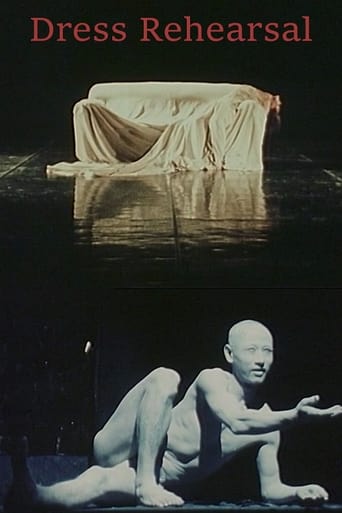
    Dress Rehearsal

    Dress Rehearsal

    6.3 1980 HD

    An exhilarating, essayistic documentary about the 1980 festival of experimental theatre in the French city of Nancy. Werner Schroeter's favourite of his own films.

    img
  • 1989
    imgMovies

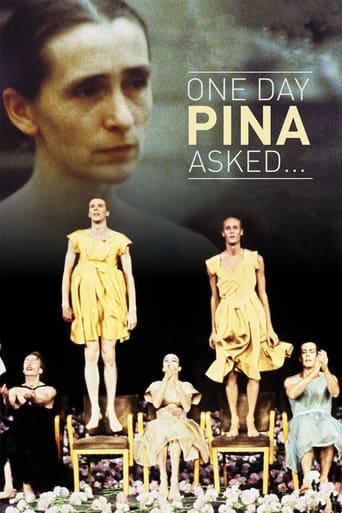
    One Day Pina Asked...

    One Day Pina Asked...

    5.6 1989 HD

    Chantal Akerman followed famous Choreographer Pina Bausch and her company of dancers, The Tanzteater Wuppertal, for five weeks while they were on tour in Germany, Italy and France. Her objective was to capture Pina Bausch's unparalleled art not only on stage by behind the scenes.

    img
  • 1985
    imgMovies

    Café Müller

    Café Müller

    1 1985 HD

    Pina Bausch created and performed Café Müller for her dance company Tanztheater Wuppertal. The dance was inspired by and based on her childhood memories of watching her father work at his café in Germany during and immediately following World War II. In this silent style featurette, Bausch shows a restaurant after closing, in which the ghosts of the departed customers stumble blindly into walls and onto chairs but fail to find one another.

    img
  • 2006
    imgMovies

    Pina Bausch

    Pina Bausch

    1 2006 HD

    Documentary about German choreographer Pina Bausch.

    img
  • 2010
    imgMovies

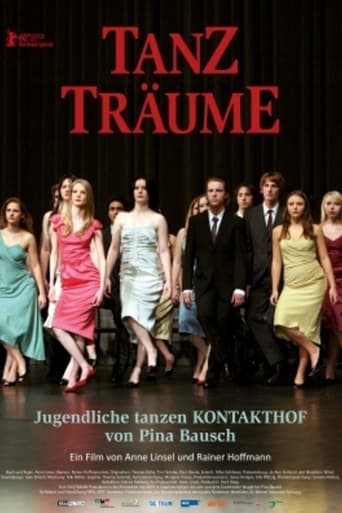
    Dancing Dreams

    Dancing Dreams

    6.8 2010 HD

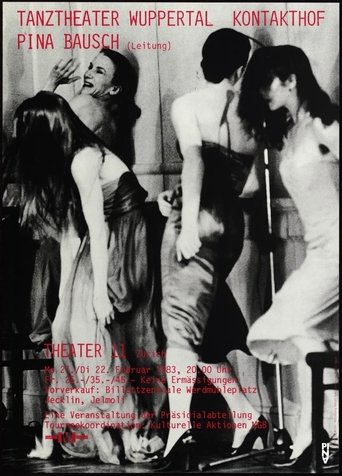
    The dance performance “Kontakthof” bears the unmistakable signature of Pina Bausch: it deals with forms of human contact, encounters between the sexes, and the search for love and tenderness, with all its attendant anxieties, yearnings and doubts. It is a dance about feelings, which always pose a big challenge – particularly for young people. Teenagers from more than eleven schools in Wuppertal went on an emotional journey that lasted almost a year. Every Saturday, forty students aged between fourteen and eighteen years of age took part in rehearsals that were led by Bausch-dancers Jo-Ann Endicott and Bénédicte Billiet and intensely supervised by Pina Bausch herself.

    img
  • 1983
    imgMovies

    What Are Pina Bausch and Her Dancers Doing in Wuppertal?

    What Are Pina Bausch and Her Dancers Doing in Wuppertal?

    1 1983 HD

    Wuppertal is a drizzly, industrial city on the Rhine and one immediately wonders why Pina Bausch and her avant-garde dance troupe have settled there. A socially engaged documentarian, Wildenhahn is also perplexed by this issue and spends considerable time trying to place Bausch in a context outside of the aesthetic. Still, the dance company's daily life and the excruciating rehearsal and performance schedule is solidly captured. The film begins cleverly: a dance critic offers sagacious comments on ballet dancers finishing their careers at mid-thirty just when, according to Bausch, the "aspects of misery, suffering and fear of death should become an integral part of a dancer's spiritual and psychological make-up." Wildenhahn's camera glides over the dancers' bodies as Bausch leads them through their paces, a consummate teacher. Leaving behind rehearsals of "Bandoneón" and "Walzer," Wildenhahn then ventures out into the streets of Wuppertal searching for the dance of the common people.

    img
  • 1970
    imgMovies

    Lissabon Wuppertal Lisboa

    Lissabon Wuppertal Lisboa

    1 1970 HD

    A making-of of Pina Bausch's ballet piece "Masurca Fogo" (1998), for the EXPO 98, from the first workshop in Lisbon until the avant premiere in Wuppertal, Pina Bausch's city, all moments dated on screen. The ballet master presides behind her work desk to the creation of steps by different dancers, as varied a mix as the African, Latin American, Fado and jazz music to which they swirl, representing the spirit of that world event. Not by chance, the camera shows prominently a photo-book on the gypsies close to Pina's ashtray. The ballet's premiere was in Germany, and the documentary's premiere was at the EXPO 98 in Lisbon.

    img
  • 2023
    imgMovies

    Dancing Pina

    Dancing Pina

    8.2 2023 HD

    Two of Pina Bausch’s most famous works are rehearsed in Germany and Senegal, championing the choreographer’s legacy through a younger generation of dancers.

    img
  • 1990
    imgMovies

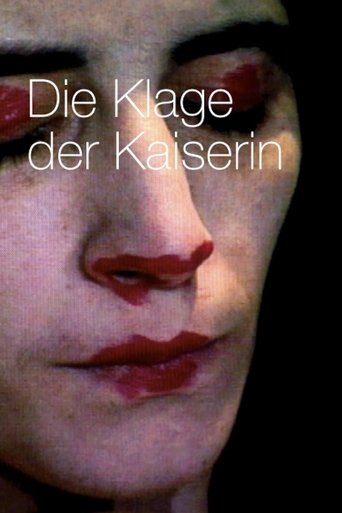
    The Complaint of an Empress

    The Complaint of an Empress

    4.2 1990 HD

    This first film by choreographer Pina Bausch reflects her method of working as developed with the Wuppertal Theatre of Dance during the 1973/74 season. The film does not tell a story, but is made up of various scenes put together as a collage with scenes set in different locations. The futility of human activity and the search for love make up the film's central theme set against the strains of a Silician funeral march. Filmed on location in Wuppertal, Germany, between October 1987 and April 1989.

    img
  • 1990
    imgMovies

    The Complaint of an Empress

    The Complaint of an Empress

    4.2 1990 HD

    This first film by choreographer Pina Bausch reflects her method of working as developed with the Wuppertal Theatre of Dance during the 1973/74 season. The film does not tell a story, but is made up of various scenes put together as a collage with scenes set in different locations. The futility of human activity and the search for love make up the film's central theme set against the strains of a Silician funeral march. Filmed on location in Wuppertal, Germany, between October 1987 and April 1989.

    img
  • 1990
    imgMovies

    The Complaint of an Empress

    The Complaint of an Empress

    4.2 1990 HD

    This first film by choreographer Pina Bausch reflects her method of working as developed with the Wuppertal Theatre of Dance during the 1973/74 season. The film does not tell a story, but is made up of various scenes put together as a collage with scenes set in different locations. The futility of human activity and the search for love make up the film's central theme set against the strains of a Silician funeral march. Filmed on location in Wuppertal, Germany, between October 1987 and April 1989.

    img
  • 2020
    imgMovies

    Dancing at Dusk – A moment with Pina Bausch’s The Rite of Spring

    Dancing at Dusk – A moment with Pina Bausch’s The Rite of Spring

    1 2020 HD

    Pina Bausch’s iconic choreography to The Rite of Spring danced on the beach in Toubab Dialaw, Senegal. Filmed as the world descended into lockdown, this recording captures the last rehearsal of a specially assembled company of 38 dancers from 14 African countries, and documents a unique moment in their preparations for an international tour that would go on to be cancelled by COVID-19.

    img
  • 1985
    imgMovies

    Café Müller

    Café Müller

    1 1985 HD

    Pina Bausch created and performed Café Müller for her dance company Tanztheater Wuppertal. The dance was inspired by and based on her childhood memories of watching her father work at his café in Germany during and immediately following World War II. In this silent style featurette, Bausch shows a restaurant after closing, in which the ghosts of the departed customers stumble blindly into walls and onto chairs but fail to find one another.

    img
  • 2014
    imgMovies

    Kontakthof - Ein Stück von Pina Bausch

    Kontakthof - Ein Stück von Pina Bausch

    1 2014 HD

    In many ways, "Kontakthof" could be seen as the sum of Pina Bausch's choreographies: the performance takes place at a single location. The high room is completely empty and open to the public - like a showcase. The other three sides are furnished with long rows of chairs, like in a dance school. Men and women sit next to each other. Little by little they rise and all sorts of encounters ensue, some cautious and tentative, others wild and impetuous. Sometimes there is a single couple on the dance floor, sometimes the full cast of 30 dancers. Bausch created this piece with her ensemble in 1978. "Kontakthof" is one of four choreographies by Pina Bausch that the director Wim Wenders recorded in full for his film "Pina - Tanzt, tanzt, oder wir los sind" ("Pina - Dance, Dance, Otherwise We Are Lost").

    img
  • 2014
    imgMovies

    Kontakthof - Ein Stück von Pina Bausch

    Kontakthof - Ein Stück von Pina Bausch

    1 2014 HD

    In many ways, "Kontakthof" could be seen as the sum of Pina Bausch's choreographies: the performance takes place at a single location. The high room is completely empty and open to the public - like a showcase. The other three sides are furnished with long rows of chairs, like in a dance school. Men and women sit next to each other. Little by little they rise and all sorts of encounters ensue, some cautious and tentative, others wild and impetuous. Sometimes there is a single couple on the dance floor, sometimes the full cast of 30 dancers. Bausch created this piece with her ensemble in 1978. "Kontakthof" is one of four choreographies by Pina Bausch that the director Wim Wenders recorded in full for his film "Pina - Tanzt, tanzt, oder wir los sind" ("Pina - Dance, Dance, Otherwise We Are Lost").

    img
  • 2014
    imgMovies

    Vollmond - Ein Stück von Pina Bausch

    Vollmond - Ein Stück von Pina Bausch

    1 2014 HD

    Complete recording of Pina Bausch's piece Vollmond (Full Moon) by Wim Wenders.

    img
  • 2008
    imgMovies

    Orpheus and Eurydice

    Orpheus and Eurydice

    10 2008 HD

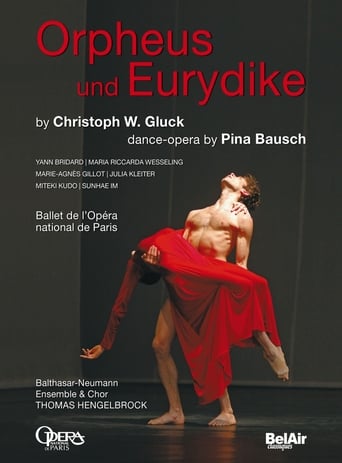
    The Ballet de l'Opera National de Paris mounted this production of the late Pina Bausch's dance-opera Orpheus und Eurydike, which Bausch had adapted from composer Christoph Willibald-Gluck and Ranieri de' Calzabigi's 1762 opera Orfeo ed Euridice. As the title suggests, it takes its basic narrative from the myth of Orpheus, and his courageous but ill-fated attempt to rescue his lover Eurydice (also known as Eurydike) from the jaws of the underworld. This particular production finds Yann Bridard dancing as Orpheus and Marie-Agnès Gillot dancing as Eurydike , with mezzo-soprano Maria-Riccarda Wesseling accompanying Bridard and soprano Julia Kleiter accompanying Wesseling. Pina Bausch did the choreography and stage direction, while Rolf Borzik designed the sets, costumes and lighting. The Balthasar-Neumann Ensemble & Choir, under the direction of Thomas Hengelbrock, lend musical accompaniment.

    img
  • 1986
    imgMovies

    Walzer

    Walzer

    1 1986 HD

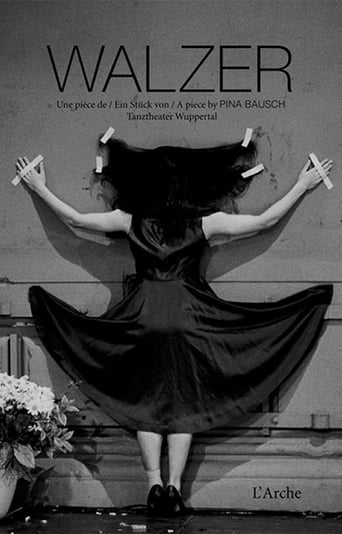
    Walzer is an excerpt taken from a work by the same name. Pina Bausch premiered it in the summer of 1982 at the Carré Theatre in Amsterdam and filmed it in the autumn of the same year in the theatre of Wuppertal. When in 1986 the German radio station Norddeutscher Rundfunk in Hamburg asked for a recording, Pina Bausch selected and edited the material into the film Walzer.

    img
  • 1987
    imgMovies

    AHNEN ahnen

    AHNEN ahnen

    1 1987 HD

    While Pina Bausch was preparing her film The Plaint of the Empress in 1987, the French, British and German co-producers were waiting for a script. No script: no film. That is how the film industry saw things.The discussions dragged on but eventually the TV stations accepted the idea of shooting the film without a script. Someone had the idea of making a "test film" showing what the results of working in Pina Bausch's way could be. That's how this film was born - a documentary on the rehearsals for AHNEN, a piece she was developing at the time. For twenty five years the film stayed in the archives; today it emerges as an extraordinary document. This is how Pina Bausch and her company worked. This is how this work was created, that touched so many people continous to do so today.

    img
  • 2014
    imgMovies

    Vollmond - Ein Stück von Pina Bausch

    Vollmond - Ein Stück von Pina Bausch

    1 2014 HD

    Complete recording of Pina Bausch's piece Vollmond (Full Moon) by Wim Wenders.

    img
  • 1989
    imgMovies

    Palermo Palermo - Ein Stück von Pina Bausch

    Palermo Palermo - Ein Stück von Pina Bausch

    1 1989 HD

    As debut of the film series, video footage of the piece Palermo Palermo, which was taken shortly after the piece’s premiere in 1989, has been digitally restored. Thanks to a grant from the Arts Foundation of North Rhine-Westphalia and the Cultural Foundation of the German Federal States, the material produced by Metrovision was acquired from the publishing house L’Arche Éditeur and has now been cut into a film version by the Pina Bausch Foundation.

    img
  • 1978
    imgMovies

    The Rite of Spring

    The Rite of Spring

    1 1978 HD

    ...Dancing to the border of exhaustion. Dressed in little, the black earth sticks to their skin. Yes, to the point where it hurts. A document of early Pina Bausch, an authentic recording of one of the most outstanding choreographies of the 20th century.

    img
  • 1978
    imgMovies

    The Rite of Spring

    The Rite of Spring

    1 1978 HD

    ...Dancing to the border of exhaustion. Dressed in little, the black earth sticks to their skin. Yes, to the point where it hurts. A document of early Pina Bausch, an authentic recording of one of the most outstanding choreographies of the 20th century.

    img
  • 1970
    imgMovies

    Bluebeard

    Bluebeard

    1 1970 HD

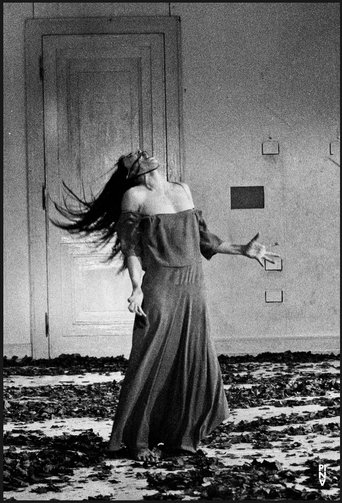
    In a castle whose floor is littered with dead leaves, a man compulsively plays a tape recorder. Surrounded by figures that haunt him, he listens, rewinds and listens again to the music of Bluebeard.

    img
  • 1985
    imgMovies

    Café Müller

    Café Müller

    1 1985 HD

    Pina Bausch created and performed Café Müller for her dance company Tanztheater Wuppertal. The dance was inspired by and based on her childhood memories of watching her father work at his café in Germany during and immediately following World War II. In this silent style featurette, Bausch shows a restaurant after closing, in which the ghosts of the departed customers stumble blindly into walls and onto chairs but fail to find one another.

    img
  • 1970
    imgMovies

    Nelken Ein Stück von Pina Bausch

    Nelken Ein Stück von Pina Bausch

    1 1970 HD

    img
  • 1948
    imgS74 E1

    Bambi

    Bambi

    9 1948 HD

    The Bambi, often called the Bambi Award and stylised as BAMBI, is a German award presented annually by Hubert Burda Media to recognize excellence in international media and television to personalities in the media, arts, culture, sports, and other fields "with vision and creativity who affected and inspired the German public that year", both domestic and foreign. First held in 1948, it is the oldest media award in Germany. The trophy is named after Felix Salten's book Bambi, A Life in the Woods and its statuettes are in the shape of the novel's titular fawn character. They were originally made of porcelain until 1958, when the organizers switched to using gold, with the casting done by the art casting workshop of Ernst Strassacker in Süßen.

    img