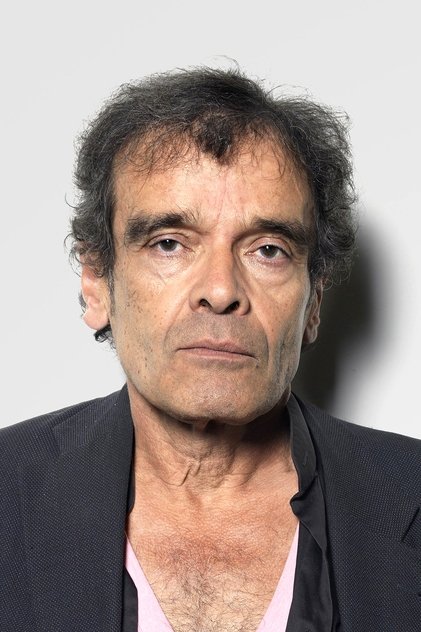
Harun Farocki

Harun Farocki

Harun Farocki was a German filmmaker, author, and lecturer in film. He made over 90 films, the vast majority of them short experimental documentaries.

  • Title: Harun Farocki
  • Popularity: 0.3323
  • Known For: Directing
  • Birthday: 1944-01-09
  • Place of Birth: Neutitschein, Sudetenland
  • Homepage: http://www.harunfarocki.de/home.html
  • Also Known As: Rosa Mercedes, Mercedes Rossa
img

Harun Farocki Movies

  • 2014
    imgMovies

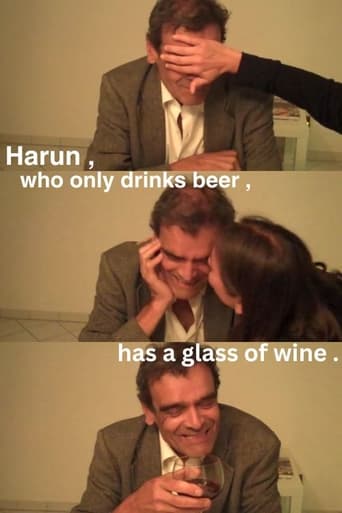
    Harun, who only drinks beer, has a glass of wine (2011).

    Harun, who only drinks beer, has a glass of wine (2011).

    1 2014 HD

    An homage to Harun Farocki, who left us too soon. I hope this memory of a wonderful summer night in Berlin testifies to his openness and generosity.

    img
  • 1978
    imgMovies

    A Picture of Sarah Schumann

    A Picture of Sarah Schumann

    1 1978 HD

    This Harun Farocki film shows the creation of a picture on which the artist worked for nine weeks. Sarah Schumann lives in Berlin and is a pioneer of the feminist scene. 1977 together with several other artists she organized the first large exhibition in which only work by women was shown. Sarah Schumann paints figuratively, that is to say she has developed a technique using layers of collage and painting worked on top of and into one another. Regarding a picture becomes an adventure. (harunfarocki.de)

    img
  • 2005
    imgMovies

    Documentary filmmaking: Christoph Hübner talks with Harun Farocki

    Documentary filmmaking: Christoph Hübner talks with Harun Farocki

    1 2005 HD

    img
  • 1975
    imgMovies

    Kampf um ein Kind

    Kampf um ein Kind

    1 1975 HD

    A West Berlin doctor, married with a two-year-old child, leaves her husband to go to Munich to work in the birth clinic of a hospital. Her husband doesn’t know that she’s pregnant with their second child. Will she have to choose between motherhood and her career?

    img
  • 1983
    imgMovies

    Straub/Huillet: Work on "Class Relations"

    Straub/Huillet: Work on "Class Relations"

    1 1983 HD

    A behind the scenes film of Class Relations.

    img
  • 1991
    imgMovies

    Images of the World and the Inscription of War

    Images of the World and the Inscription of War

    6.5 1991 HD

    Farocki’s intriguing and troubling film explores the processes of visual perception and how they affect our understanding of history and society. In a work reminiscent of the writings of Paul Virilio and Michel Foucault, Farocki examines a range of phenomena including aerial reconnaissance photos of the Auschwitz concentration camp.

    img
  • 2005
    imgMovies

    Who is Helene Schwarz?

    Who is Helene Schwarz?

    1 2005 HD

    Only the chosen few know this woman who started working as a secretary for the German Film and Television Academy (DFFB) on 13 February, 1966. The path of Helen’s career is paved with famous names – including that of Wolfgang Petersen, Holger Meins (who later became a member of the Red Army Faction) as well as directors Wolfgang Becker, Detlev Buck and Christian Petzold. All have fond memories of forgetting their troubles after having poured their hearts out over a cup of coffee in Helene’s office – for Helene was both friend and advisor to countless film students.

    img
  • 1995
    imgMovies

    Interface

    Interface

    5.3 1995 HD

    Harun Farocki was commissioned by the Lille Museum of Modern Art to produce a video 'about his work'. His creation was an installation for two screens that was presented within the scope for the 1995 exhibition The World of Photography. The work Schnittstelle developed out of that installation. Reflecting on Farocki's own documentary work, it examines the question of what it means to work with existing images rather than producing one's own, new images. The title plays on the double meaning of 'Schnitt', referring both to Farocki's workplace, the editing table, as well as the 'human-machine interface', where a person operates a computer using a keyboard and a mouse.

    img
  • 1975
    imgMovies

    About ‘Song of Ceylon’ by Basil Wright

    About ‘Song of Ceylon’ by Basil Wright

    1 1975 HD

    Song of Ceylon was commissioned for the short-lived German TV-series Telekritik and broadcasted in 1975. In Telekritik documentary approaches were analysed and made available for a critique of contemporary TV, its aesthetics and modes of production. Other authors for the series include Hartmut Bitomsky, Rainer Gansera and Klaus Wildenhahn.In the 30-minute movie, Farocki shows and comments on excerpts from the film Song of Ceylon by Basil Wright (and a short segment of Eisenstein's Mexico-fragments). Farocki's voice-over describes part of the movie, focussing on details and montage. He also uses didactic and descriptive drawings and intertitles to confront the classic documentary and its stylistic approaches with contemporary TV.

    img
  • 1969
    imgMovies

    The Inextinguishable Fire

    The Inextinguishable Fire

    6.2 1969 HD

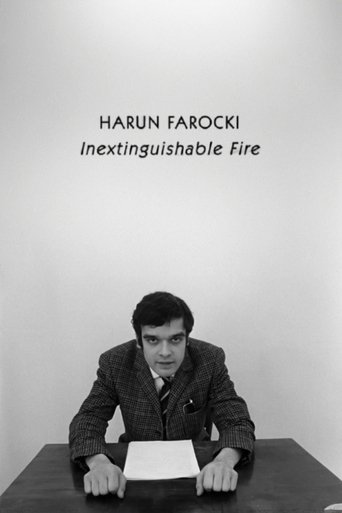
    An austere treatise on the military-industrial complex that produces napalm.

    img
  • 1968
    imgMovies

    Their Newspapers

    Their Newspapers

    6 1968 HD

    Ihre Zeitungen is a political film rooted in the 1968 student campaign against the Springer press group, which controlled popular dailies such as the Berliner Zeitung and the Bild Zeitung. Claiming the latter were manipulating public opinion, the students laid siege to the publisher's offices. These events made a strong impression on the German collective conscience, and it's in this context that Farocki made this "agit-prop" film.

    img
  • 1987
    imgMovies

    Filmtip: Der Tod des Empedokles

    Filmtip: Der Tod des Empedokles

    1 1987 HD

    Harun Farocki Interviews Andreas von Rauch, lead actor in Straub-Huillet's "The Death of Empedocles.

    img
  • 1978
    imgMovies

    "Amerika" vor Augen oder Kafka in 43 Min. 30 Sec.

    "Amerika" vor Augen oder Kafka in 43 Min. 30 Sec.

    6 1978 HD

    Essay film about Franz Kafka's novel "Amerika".

    img
  • 2015
    imgMovies

    A German Youth

    A German Youth

    7.1 2015 HD

    At the end of the 1960s the post-war generation began to revolt against their parents. This was a generation disillusioned by anti-communist capitalism and a state apparatus in which they believed they saw fascist tendencies. This generation included journalist Ulrike Meinhof, lawyer Horst Mahler, filmmaker Holger Meins as well as students Gudrun Ensslin and Andreas Baader.

    img
  • 1978
    imgMovies

    Between Two Wars

    Between Two Wars

    6 1978 HD

    A film about the time of the blast furnaces – 1917–1933 – about the development of an industry, about perfect machinery which had to run itself to the point of its own destruction.

    img
  • 1986
    imgMovies

    Schlagworte – Schlagbilder. Ein Gespräch mit Vilém Flusser

    Schlagworte – Schlagbilder. Ein Gespräch mit Vilém Flusser

    5.6 1986 HD

    Harun Farocki sits down with Vilém Flusser to discuss the front page of the German tabloid newspaper Bild Zeitung.

    img
  • 1988
    imgMovies

    Georg K. Glaser – Writer and Smith

    Georg K. Glaser – Writer and Smith

    5.7 1988 HD

    Portrait of Georg Glaser, who is a writer in the mornings and a blacksmith in the afternoons.

    img
  • 2002
    imgMovies

    Starbuck Holger Meins

    Starbuck Holger Meins

    4.3 2002 HD

    Twenty-five years after the death of Holger Meins, filmmaker and former student friend of the deceased, Gerd Conradt takes an in-depth look at the helmsman of the Baader-Meinhof gang. Who was Holger Meins? What led him into the underground? What circumstances resulted in his death, a death which made him the declared symbol of the radical opposition in Germany? What remains of his legacy?

    img
  • 2005
    imgMovies

    Palette revisited

    Palette revisited

    1 2005 HD

    Die Palette was a legendary basement bar at 55 ABC Street, where a colorful crowd of dockworkers, vagrants, students and runaways, artists and petty criminals gathered in the 1950s and early 1960s. With his novel Die Palette, published in 1968 – four years after the bar closed – Hubert Fichte created a literary monument to this venue. Conversations with former Palette regulars, pictures, and documents bring the scene of that time back to life: What did the Palette look like? What music blared from the jukebox? What about sex? And what about hitchhiking? Who, pray tell, was the sheriff? And what did that actually mean—subculture in Hamburg in the 1950s?

    img
  • 1984
    imgMovies

    Class Relations

    Class Relations

    6.8 1984 HD

    A young man, recently arrived in New York from Europe, becomes swept up in a series of events that are beyond his knowledge or control.

    img
  • 1982
    imgMovies

    Filme von Peter Weiss

    Filme von Peter Weiss

    1 1982 HD

    An introduction to films by Peter Weiss: "Study II" (1952) "Study IV" (1954)" According to the Law" (1957) "Shaded Faces" (1956 ) "What should we do now? "(1958).

    img
  • 1967
    imgMovies

    Farocki dreht

    Farocki dreht

    1 1967 HD

    img
  • 1967
    imgMovies

    3000 Houses

    3000 Houses

    1 1967 HD

    “Six young people move through a city in order to establish the starting point of their joint action. But they can’t agree on the topic. In the end everybody goes their own way and leaves the city.” - Hartmut Bitomsky

    img
  • 1980
    imgMovies

    Henry Angst

    Henry Angst

    1 1980 HD

    Henry Angst receives a farewell letter that promises an unspeakably cheerful death and calls his previous life into question. As a result, he leaves his wife and gives up his job. In a hotel room, he plays heads and tails and chooses the random path. The next day he meets Rita, a young woman whose contradictory nature attracts him.

    img
  • 1970
    imgMovies

    Zum Begriff des 'kritischen Kommunismus' bei Antonio Labriola (1843-1904)

    Zum Begriff des 'kritischen Kommunismus' bei Antonio Labriola (1843-1904)

    1 1970 HD

    Straschek's film points to the gap between workers and intellectuals and describes the "difficulties of the revolution" in a biting and witty way.

    img
  • 1993
    imgMovies

    Navy Cut

    Navy Cut

    1 1993 HD

    The revolution is as good as over, but the captain wants to send his crew into one last battle. Before this can happen, however, he is murdered. The crew is finally free. Meanwhile, the revolutionary Snow White has hidden on the ship, but she is discovered.

    img
  • 1969
    imgMovies

    Wochenschau I: Requiem für eine Firma

    Wochenschau I: Requiem für eine Firma

    1 1969 HD

    Film by a student collective of the dffb.

    img
  • 2025
    imgMovies

    About Narration

    About Narration

    1 2025 HD

    Interdisciplinary studies put into practice is a plane on which HaF's interests and mine coincide. Ideas of fictional research projects in films emerge very early on, or of film as research device, allowing people from different disciplines to come together and discover something, to pursue a line of thought, or just be adventurous. These ideas correspond to a tendency we both have of accumulating knowledge from different sciences, for example so as to bring exact sciences like medicine together with subjects which aren't directly aimed at application, such as religious studies or anthropology.

    img
  • 1978
    imgMovies

    Cinématon

    Cinématon

    4.3 1978 HD

    Cinématon is a 156-hour long experimental film by French director Gérard Courant. It was the longest film ever released until 2011. Composed over 36 years from 1978 until 2006, it consists of a series of over 2,821 silent vignettes (cinématons), each 3 minutes and 25 seconds long, of various celebrities, artists, journalists and friends of the director, each doing whatever they want for the allotted time. Subjects of the film include directors Barbet Schroeder, Nagisa Oshima, Volker Schlöndorff, Ken Loach, Benjamin Cuq, Youssef Chahine, Wim Wenders, Joseph Losey, Jean-Luc Godard, Samuel Fuller and Terry Gilliam, chess grandmaster Joël Lautier, and actors Roberto Benigni, Stéphane Audran, Julie Delpy and Lesley Chatterley. Gilliam is featured eating a 100-franc note, while Fuller smokes a cigar. Courant's favourite subject was a 7-month-old baby. The film was screened in its then-entirety in Avignon in November 2009 and was screened in Redondo Beach, CA on April 9, 2010.
    img
  • 1995
    imgMovies

    Workers Leaving the Factory

    Workers Leaving the Factory

    5.8 1995 HD

    Using one of the Lumière Brothers' first films of workers leaving the Factory as his starting point, Farocki provides an insight to changes in industrial production, workers' strikes and motion pictures-- via images of workers leaving factories throughout the years.

    img
  • 1983
    imgMovies

    Jean-Marie Straub and Danièle Huillet at Work on a Film Based on Franz Kafka’s Amerika

    Jean-Marie Straub and Danièle Huillet at Work on a Film Based on Franz Kafka’s Amerika

    6.1 1983 HD

    This film is at once a self-portrait and an homage to Jean-Marie Straub, Farocki's role model and former teacher at the Film Academy.

    img
  • 1981
    imgMovies

    Kino 81

    Kino 81

    1 1981 HD

    img
  • 1970
    imgMovies

    Die Teilung aller Tage

    Die Teilung aller Tage

    1 1970 HD

    A worker is sitting at a conveyor belt on which light bulbs are coming in at regular intervals. He takes the light bulbs from the conveyor belt and inserts them into a testing device. The light bulbs light up briefly and bathe the scene in glistening light. The worker puts the light bulb back on the conveyor belt, looks directly into the camera and shouts against the noise of the machines: "We create wealth."

    img
  • 1971
    imgMovies

    Something Self Explanatory (15x)

    Something Self Explanatory (15x)

    1 1971 HD

    An educational film about an aspect of political economy. The concepts of use value, barter value and labor as a commodity are the subjects; they are intended to introduce the process of understanding the theory of value of work and the law of values, alienation and fetish.

    img
  • 1979
    imgMovies

    Putting Things Straight

    Putting Things Straight

    1 1979 HD

    img
  • 1970
    imgMovies

    Cinématon n°1068 : Harun Farocki

    Cinématon n°1068 : Harun Farocki

    1 1970 HD

    img
  • 2016
    imgMovies

    EXPRMNTL

    EXPRMNTL

    1 2016 HD

    Knokke, Belgium. A small mundane coastal town, home to the beau-monde. To compete with Venice and Cannes, the posh casino hosts the second ‘World Festival of Film and the Arts’ in 1949, organised in part by the Royal Cinematheque of Belgium. To celebrate cinema’s 50 year existence, they put together a side program showcasing the medium in all its shapes and forms: surrealist film, absolute film, dadaist films, abstract film,… The side program would soon become a festival in its own right: ‘EXPRMNTL’, dedicated to experimental cinema, and would become a mythical gathering of the avant-garde…

    img
  • 1968
    imgMovies

    Break the Power of the Manipulators

    Break the Power of the Manipulators

    1 1968 HD

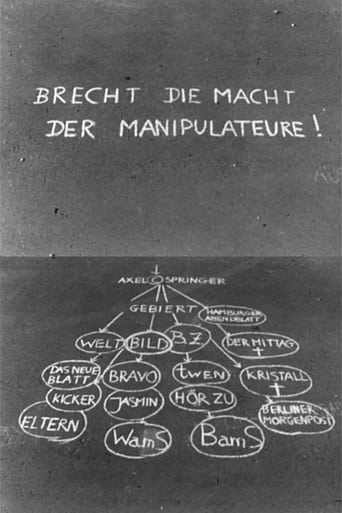
    Documentary by Helke Sander, in collaboration with Harun Farocki (among others), about the campaign of the West German New Left against the publishing house Springer, particularly its control and manipulation of the news.

    img
  • 2005
    imgMovies

    Ghosts

    Ghosts

    6 2005 HD

    Nina, an end-of-teenage orphan with mental problems, starts a new job as a garden cleaner when she meets Toni. They fell in love with each other, but soon Toni starts betraying Nina. In the meantime, Francoise is picked up at a psychic department of a Berlin hospital by her husband, Pierre. After seeing Nina, Francoise believes that she has found her kidnapped daughter Marie, but neither Toni nor Pierre believe her. Nina is unsure about what to think...

    img
  • 1969
    imgMovies

    The Inextinguishable Fire

    The Inextinguishable Fire

    6.2 1969 HD

    An austere treatise on the military-industrial complex that produces napalm.

    img
  • 1998
    imgMovies

    What Farocki Taught

    What Farocki Taught

    5 1998 HD

    A remake, in English of the German film Nicht löschbares Feuer (1969).

    img
  • 1997
    imgMovies

    Still Life

    Still Life

    6.7 1997 HD

    According to Harun Farocki, today's photographers working in advertising are, in a way, continuing the tradition of 17th century Flemish painters in that they depict objects from everyday life - the "still life". The filmmaker illustrates this intriguing hypothesis with three documentary sequences which show the photographers at work creating a contemporary "still life": a cheese-board, beer glasses and an expensive watch.

    img
  • 1997
    imgMovies

    Still Life

    Still Life

    6.7 1997 HD

    According to Harun Farocki, today's photographers working in advertising are, in a way, continuing the tradition of 17th century Flemish painters in that they depict objects from everyday life - the "still life". The filmmaker illustrates this intriguing hypothesis with three documentary sequences which show the photographers at work creating a contemporary "still life": a cheese-board, beer glasses and an expensive watch.

    img
  • 2012
    imgMovies

    A New Product

    A New Product

    6.5 2012 HD

    A New Product is a corporate documentary, or, that is, a document of corporate qualities; specifically about what seems to be a small company whose purpose is to consult and design working spaces for larger corporations, exemplified by Vodafone and Unilever.

    img
  • 2012
    imgMovies

    A New Product

    A New Product

    6.5 2012 HD

    A New Product is a corporate documentary, or, that is, a document of corporate qualities; specifically about what seems to be a small company whose purpose is to consult and design working spaces for larger corporations, exemplified by Vodafone and Unilever.

    img
  • 2001
    imgMovies

    The State I Am In

    The State I Am In

    6.806 2001 HD

    Clara and Hans are left-wing terrorists who have been sought by police for almost fifteen years. Their increasingly rebellious daughter Jeanne begins to pose a threat to their security when she falls in love with a boy she meets on the beach.

    img
  • 2009
    imgMovies

    In Comparison

    In Comparison

    6.6 2009 HD

    In Comparison revisits issues explored in the director's 2007 two channel installation Comparison Via a Third. Spanning continents and cultures, the film focuses on the brick in its many contexts, from the collective efforts of a community building a clinic in Burkina Faso, through semi industrialized moldings in India, to industrial production lines in Germany, France, Austria and Switzerland. Through its notable structure and its captivating rhythms, In Comparison presents various methods of labor production, allowing for an assessment that changes with every layer and goes well beyond a simple binary divide.

    img
  • 2009
    imgMovies

    In Comparison

    In Comparison

    6.6 2009 HD

    In Comparison revisits issues explored in the director's 2007 two channel installation Comparison Via a Third. Spanning continents and cultures, the film focuses on the brick in its many contexts, from the collective efforts of a community building a clinic in Burkina Faso, through semi industrialized moldings in India, to industrial production lines in Germany, France, Austria and Switzerland. Through its notable structure and its captivating rhythms, In Comparison presents various methods of labor production, allowing for an assessment that changes with every layer and goes well beyond a simple binary divide.

    img
  • 1991
    imgMovies

    Images of the World and the Inscription of War

    Images of the World and the Inscription of War

    6.5 1991 HD

    Farocki’s intriguing and troubling film explores the processes of visual perception and how they affect our understanding of history and society. In a work reminiscent of the writings of Paul Virilio and Michel Foucault, Farocki examines a range of phenomena including aerial reconnaissance photos of the Auschwitz concentration camp.

    img
  • 1991
    imgMovies

    Images of the World and the Inscription of War

    Images of the World and the Inscription of War

    6.5 1991 HD

    Farocki’s intriguing and troubling film explores the processes of visual perception and how they affect our understanding of history and society. In a work reminiscent of the writings of Paul Virilio and Michel Foucault, Farocki examines a range of phenomena including aerial reconnaissance photos of the Auschwitz concentration camp.

    img
  • 1992
    imgMovies

    The Warm Money

    The Warm Money

    6.1 1992 HD

    Vera and Heike are two friends who aspire for a dazzling lifestyle, but don’t own any savings to do so. Vera decides to start stealing from men while sipping drinks with them in bars. When Heike takes over her job, her technique doesn’t prove as successful and she ends up being caught at once.

    img
  • 2007
    imgMovies

    Memories

    Memories

    5.5 2007 HD

    Previously focused on Asian directors, “Jeonju Digital Project 2007” takes a look at Europe. The Portuguese filmmaker Pedro Costa, the German filmmaker Harun Farocki, and the French filmmaker Eugène Green participated in this project.

    img
  • 2007
    imgMovies

    Memories

    Memories

    5.5 2007 HD

    Previously focused on Asian directors, “Jeonju Digital Project 2007” takes a look at Europe. The Portuguese filmmaker Pedro Costa, the German filmmaker Harun Farocki, and the French filmmaker Eugène Green participated in this project.

    img
  • 2007
    imgMovies

    Memories

    Memories

    5.5 2007 HD

    Previously focused on Asian directors, “Jeonju Digital Project 2007” takes a look at Europe. The Portuguese filmmaker Pedro Costa, the German filmmaker Harun Farocki, and the French filmmaker Eugène Green participated in this project.

    img
  • 2007
    imgMovies

    Memories

    Memories

    5.5 2007 HD

    Previously focused on Asian directors, “Jeonju Digital Project 2007” takes a look at Europe. The Portuguese filmmaker Pedro Costa, the German filmmaker Harun Farocki, and the French filmmaker Eugène Green participated in this project.

    img
  • 1996
    imgMovies

    Cuba Libre

    Cuba Libre

    6 1996 HD

    Tom steals Tina's love and money, and five years later they meet again by chance. Both wanting to get back what was taken from them, they dream of traveling to Cuba. In the end, however, they only manage to get as far as the Belgian coast.

    img
  • 2004
    imgMovies

    Nothing Ventured

    Nothing Ventured

    6.3 2004 HD

    What venture capital or VC for short actually means is explained in the film itself. Banks only lend money against collateral. Those who have none have to turn to VC companies and pay interest of 40%.

    img
  • 2003
    imgMovies

    War at a Distance

    War at a Distance

    6 2003 HD

    In 1991, when images of the Gulf War flooded the international media, it was virtually impossible to distinguish between real pictures and those generated on computer. This loss of bearings was to change forever our way of deciphering what we see. The image is no longer used only as testimony, but also as an indispensable link in a process of production and destruction. This is the central premise of "War at a Distance", which continues the deconstruction of claims to visual objectivity Harun Farocki developed in his earlier work. With the help of archival and original material, Farocki sets out in effect to define the relationship between military strategy and industrial production and sheds light on how the technology of war finds applications in everyday life.

    img
  • 2007
    imgMovies

    Übertragung

    Übertragung

    6.3 2007 HD

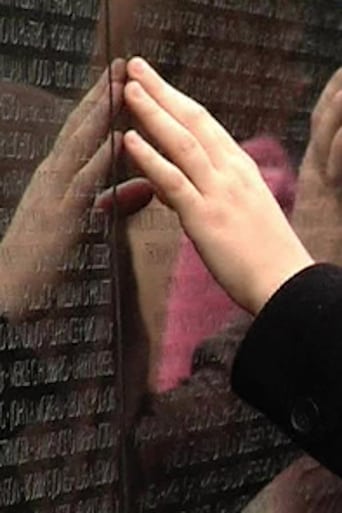
    Examines monuments scattered all over the world that have become goals for pilgrims and tourists and now serve to meet a whole range of different needs, from personal memory to spiritual enlightenment and religious sentiment. Farocki starts from the Vietnam Memorial in Washington ... thousands of people visit it every day, touch the letters and trace the names of family and friends in an attempt to establish a link between their own lives and the past. Other objects of pilgrimage – including the foot of the statue of the Apostle in St Peter’s and the Bocca della Verità in Rome as well as the devil’s footprint in the Frauenkirche in Munich and the monument in the Buchenwald concentration camp – meet the same need for understanding and purification. Stone is the material in which the collective memory of a life or an event in the past is immortalized and becomes an object of worship. At the same time, the memory of thousands of visitors is preserved in the traces of wear it displays.

    img
  • 2007
    imgMovies

    Respite

    Respite

    6.3 2007 HD

    Respite consists of silent black-and-white film shot at Westerbork, a Dutch refugee camp established in 1939 for Jews fleeing Germany. In 1942, after the occupation of Holland, its function was reversed by the Nazis and it became a 'transit camp.' In 1944, the camp commander commissioned a film, shot by a photographer, Rudolph Breslauer. “By exhuming the scattered fragments and traces of the phantom film (intertitle cards, ideas for the scenario, graphic elements), Harun Farocki inscribes the Dutch footage within the genre of the corporate film.

    img
  • 2000
    imgMovies

    Prison Images

    Prison Images

    7.143 2000 HD

    A film composed of images from prisons. Quotes from fiction films and documentaries as well as footage from surveillance cameras. A look at the new control technologies, at personal identification devices, electronic ankle bracelets, electronic tracking devices.

    img
  • 2000
    imgMovies

    Prison Images

    Prison Images

    7.143 2000 HD

    A film composed of images from prisons. Quotes from fiction films and documentaries as well as footage from surveillance cameras. A look at the new control technologies, at personal identification devices, electronic ankle bracelets, electronic tracking devices.

    img
  • 2005
    imgMovies

    Aufstellung

    Aufstellung

    10 2005 HD

    The diagrams used to help represent consumer shopping baskets, the pensions deficit or migration are anachronistic, Farocki posits; Whether pictographs or simple bar or pie charts, their abstractions all display an impotence of information. "Examples of diagrams gleaned from newspapers, school text books and official publications are [...] the history of migration in the Federal Republic of Germany. What we are seeking, therefore, is a conceptual critique of the ways in which migration is presented, pursuing the icons and symbols back to their origins and examining them with regard to content they themselves are unaware of." -HF

    img
  • 2004
    imgMovies

    Nothing Ventured

    Nothing Ventured

    6.3 2004 HD

    What venture capital or VC for short actually means is explained in the film itself. Banks only lend money against collateral. Those who have none have to turn to VC companies and pay interest of 40%.

    img
  • 2000
    imgMovies

    I Thought I Was Seeing Convicts

    I Thought I Was Seeing Convicts

    6.4 2000 HD

    Images from the maximum-security prison in Corcoran, California. A surveillance camera shows a pie-shaped segment of the concrete yard where the prisoners, dressed in shorts and mostly shirtless, are allowed to spend half an hour a day. When one convict attacks another, those not involved lay flat on the ground, arms over their heads. They know that when a fight breaks out, the guard calls out a warning and then fires rubber bullets. If the fight continues, the guard shoots real bullets. The pictures are silent, the trail of gun smoke drifts across the picture. The camera and the gun are right next to each other.

    img
  • 2003
    imgMovies

    War at a Distance

    War at a Distance

    6 2003 HD

    In 1991, when images of the Gulf War flooded the international media, it was virtually impossible to distinguish between real pictures and those generated on computer. This loss of bearings was to change forever our way of deciphering what we see. The image is no longer used only as testimony, but also as an indispensable link in a process of production and destruction. This is the central premise of "War at a Distance", which continues the deconstruction of claims to visual objectivity Harun Farocki developed in his earlier work. With the help of archival and original material, Farocki sets out in effect to define the relationship between military strategy and industrial production and sheds light on how the technology of war finds applications in everyday life.

    img
  • 2003
    imgMovies

    Eye / Machine III

    Eye / Machine III

    1 2003 HD

    The third part of the Eye/Machine cycle structures the material around the concept of the operational image. These are images which do not portray a process but are themselves part of a process. As early as the Eighties, cruise missiles used a stored image of a real landscape then took an actual image during flight, the software compared the two images. A comparison between idea and reality, a confrontation between pure war and the impurity of the actual. This confrontation is also a montage and montage is always about similarity and difference. Many operational images show coloured guidance lines, intended to portray the work of recognition. The lines tell us emphatically what is all important in these images, and just as emphatically what is of no importance at all. Superfluous reality is denied – a constant denial provoking opposition.

    img
  • 2002
    imgMovies

    Eye / Machine II

    Eye / Machine II

    1 2002 HD

    In Eye/Machine II, Farocki has brought together visual material from both military and civilian sectors, showing machines operating intelligently and what it is they see when working on the basis of image processing programs. The traditional man-machine distinction becomes reduced to "eye/machine"" where cameras are implanted into the machines as eyes. As a result of the Gulf War, the technology of warfare came to provide an innovative impulse, which boosted the development of civilian production. Farocki shows us computer simulated images looking like something out of science-fiction films: rockets steer towards islands set in a shining sea; apartment blocks are blown up; fighter aircraft fire at one another with rockets and defend themselves with virtual flares.

    img
  • 2000
    imgMovies

    I Thought I Was Seeing Convicts

    I Thought I Was Seeing Convicts

    6.4 2000 HD

    Images from the maximum-security prison in Corcoran, California. A surveillance camera shows a pie-shaped segment of the concrete yard where the prisoners, dressed in shorts and mostly shirtless, are allowed to spend half an hour a day. When one convict attacks another, those not involved lay flat on the ground, arms over their heads. They know that when a fight breaks out, the guard calls out a warning and then fires rubber bullets. If the fight continues, the guard shoots real bullets. The pictures are silent, the trail of gun smoke drifts across the picture. The camera and the gun are right next to each other.

    img
  • 2001
    imgMovies

    Eye / Machine I

    Eye / Machine I

    1 2001 HD

    The work centers on the images of the Gulf War which caused worldwide sensation in 1991. In the shots taken from projectiles homing in on their targets, bomb and reporter were identical, according to a theory put forward by the philosopher Klaus Theweleit. At the same time it was impossible to distinguish between the photographed and the (computer) simulated images. The loss of the 'genuine picture' means the eye no longer has a role as historical witness. It has been said that what was brought into play in the Gulf War was not new weaponry but rather a new policy on images. In this way the basis for electronic warfare was created...

    img
  • 2001
    imgMovies

    Eye / Machine I

    Eye / Machine I

    1 2001 HD

    The work centers on the images of the Gulf War which caused worldwide sensation in 1991. In the shots taken from projectiles homing in on their targets, bomb and reporter were identical, according to a theory put forward by the philosopher Klaus Theweleit. At the same time it was impossible to distinguish between the photographed and the (computer) simulated images. The loss of the 'genuine picture' means the eye no longer has a role as historical witness. It has been said that what was brought into play in the Gulf War was not new weaponry but rather a new policy on images. In this way the basis for electronic warfare was created...

    img
  • 2002
    imgMovies

    Eye / Machine II

    Eye / Machine II

    1 2002 HD

    In Eye/Machine II, Farocki has brought together visual material from both military and civilian sectors, showing machines operating intelligently and what it is they see when working on the basis of image processing programs. The traditional man-machine distinction becomes reduced to "eye/machine"" where cameras are implanted into the machines as eyes. As a result of the Gulf War, the technology of warfare came to provide an innovative impulse, which boosted the development of civilian production. Farocki shows us computer simulated images looking like something out of science-fiction films: rockets steer towards islands set in a shining sea; apartment blocks are blown up; fighter aircraft fire at one another with rockets and defend themselves with virtual flares.

    img
  • 2003
    imgMovies

    Eye / Machine III

    Eye / Machine III

    1 2003 HD

    The third part of the Eye/Machine cycle structures the material around the concept of the operational image. These are images which do not portray a process but are themselves part of a process. As early as the Eighties, cruise missiles used a stored image of a real landscape then took an actual image during flight, the software compared the two images. A comparison between idea and reality, a confrontation between pure war and the impurity of the actual. This confrontation is also a montage and montage is always about similarity and difference. Many operational images show coloured guidance lines, intended to portray the work of recognition. The lines tell us emphatically what is all important in these images, and just as emphatically what is of no importance at all. Superfluous reality is denied – a constant denial provoking opposition.

    img
  • 2001
    imgMovies

    The Creators of the Shopping Worlds

    The Creators of the Shopping Worlds

    6.3 2001 HD

    A look at how mall producers design malls in order to maximise traffic and sales.

    img
  • 1998
    imgMovies

    Words and Games

    Words and Games

    5.7 1998 HD

    The new production plants for the daily chat- and game shows are on the periphery; in the case of Unterföhring near Munich on the extension to the Bahnhofstraße named Medienallee (Media Avenue). This industry is so new, that it cannot as yet reliably predict costs and extra costs, profits and extra profits; its most important raw material is the ordinary, everyday person. They are cheap and they want to make an appearance, but are they worth showing?

    img
  • 1997
    imgMovies

    The Expression of Hands

    The Expression of Hands

    5.8 1997 HD

    Historically, the cinema close-up was initially employed to convey emotions through facial expressions. But soon filmmakers also began focusing their attention on hands. Using film extracts, Farocki explores this visual language, its symbolism, Freudian slips, automatisms and its music. Often, hands betray an emotion which the face tries to dissimulate. They can also function as a conduit (exchanging money) or witness to a form of competence (work).

    img
  • 1998
    imgMovies

    Words and Games

    Words and Games

    5.7 1998 HD

    The new production plants for the daily chat- and game shows are on the periphery; in the case of Unterföhring near Munich on the extension to the Bahnhofstraße named Medienallee (Media Avenue). This industry is so new, that it cannot as yet reliably predict costs and extra costs, profits and extra profits; its most important raw material is the ordinary, everyday person. They are cheap and they want to make an appearance, but are they worth showing?

    img
  • 1997
    imgMovies

    Still Life

    Still Life

    6.7 1997 HD

    According to Harun Farocki, today's photographers working in advertising are, in a way, continuing the tradition of 17th century Flemish painters in that they depict objects from everyday life - the "still life". The filmmaker illustrates this intriguing hypothesis with three documentary sequences which show the photographers at work creating a contemporary "still life": a cheese-board, beer glasses and an expensive watch.

    img
  • 1983
    imgMovies

    An Image

    An Image

    5.125 1983 HD

    "Four days spent in a studio working on a centerfold photo for Playboy magazine provided the subject matter for my film. The magazine itself deals with culture, cars, a certain lifestyle. Maybe all those trappings are only there to cover up the naked woman. Maybe it’s like with a paper-doll. The naked woman in the middle is a sun around which a system revolves: of culture, of business, of living!" (Harun Farocki, Zelluloid, no. 27, Fall 1988)

    img
  • 1992
    imgMovies

    Videograms of a Revolution

    Videograms of a Revolution

    7.8 1992 HD

    Videograms of a Revolution is a 1992 documentary film compiled by Harun Farocki and Andrei Ujică from over 125 hours of amateur footage, news footage, and excerpts from the Bucharest TV studio overtaken by demonstrators as part of the December 1989 Romanian Revolution.

    img
  • 2025
    imgMovies

    Single. A Record is Being Produced

    Single. A Record is Being Produced

    1 2025 HD

    Single is not a theoretical treatise; it just uses clips to show how a single is produced. The song is Time to Love, the singers call themselves Witchcraft. Also involved are the composer, arranger, producer, the studio musicians and later on the strings. At the beginning the off camera narrator points out a scandalous discrepancy. The film crew spent two days in the recording studio observing a three minute piece of music being produced. The film itself condenses the duration of production: 15 minutes into the film, the narrator announces that the producers are satisfied with the basic backing-track, after a four hour test. After 24 minutes we learn that the crew has left the studio after nine hours filming, whilst work on the guitar tracks continued for some hours.

    img
  • 2025
    imgMovies

    Single. A Record is Being Produced

    Single. A Record is Being Produced

    1 2025 HD

    Single is not a theoretical treatise; it just uses clips to show how a single is produced. The song is Time to Love, the singers call themselves Witchcraft. Also involved are the composer, arranger, producer, the studio musicians and later on the strings. At the beginning the off camera narrator points out a scandalous discrepancy. The film crew spent two days in the recording studio observing a three minute piece of music being produced. The film itself condenses the duration of production: 15 minutes into the film, the narrator announces that the producers are satisfied with the basic backing-track, after a four hour test. After 24 minutes we learn that the crew has left the studio after nine hours filming, whilst work on the guitar tracks continued for some hours.

    img
  • 1990
    imgMovies

    How to Live in the German Federal Republic

    How to Live in the German Federal Republic

    5.7 1990 HD

    A series of 32 short scenes, uniformly set in West German instructional and training classes, that show various tasks among the citizenry being done solely as the result of exhaustive preparation - everything from women preparing to give birth, to strippers stripping, to policemen making arrests. Farocki uses the material to savagely dissect the West German mode of life. ~ Nathan Southern, Rovi

    img
  • 1993
    imgMovies

    A Day in the Life of a Consumer

    A Day in the Life of a Consumer

    5 1993 HD

    The film shows one day from waking up in the morning all the way to waking up again the next morning. The everyday situations that many commercials are made of, the little dramas that they create and solve through the product or service they sell, are stitched together into one day. This is a film about the everyday in (German, or Western-European) society because the commercials are part of the everyday of most people (everyone who watches television) and they depict an ideal image of society. The film abundantly uses repetition as an editing technique, in visual ways as described above, but also because commercials can be read in different ways. For instance, Brat baking foil shows up at the evening dinner sequence, when an ovendish is put on the table, and again later on in the sequence about going out to a classic concert, because the clip has classic music.

    img
  • 1995
    imgMovies

    Workers Leaving the Factory

    Workers Leaving the Factory

    5.8 1995 HD

    Using one of the Lumière Brothers' first films of workers leaving the Factory as his starting point, Farocki provides an insight to changes in industrial production, workers' strikes and motion pictures-- via images of workers leaving factories throughout the years.

    img
  • 2012
    imgMovies

    A New Product

    A New Product

    6.5 2012 HD

    A New Product is a corporate documentary, or, that is, a document of corporate qualities; specifically about what seems to be a small company whose purpose is to consult and design working spaces for larger corporations, exemplified by Vodafone and Unilever.

    img
  • 1983
    imgMovies

    Jean-Marie Straub and Danièle Huillet at Work on a Film Based on Franz Kafka’s Amerika

    Jean-Marie Straub and Danièle Huillet at Work on a Film Based on Franz Kafka’s Amerika

    6.1 1983 HD

    This film is at once a self-portrait and an homage to Jean-Marie Straub, Farocki's role model and former teacher at the Film Academy.

    img
  • 1994
    imgMovies

    The Leading Role

    The Leading Role

    1 1994 HD

    1989, the fall of the Berlin wall. Television crews trying, for days on end, to get an emblematic image which would crystallise the event: to no avail. Five years later, Farocki delivers a montage film of this footage, trying to define this ‚absent image'. "Today, 5 years later, this material shows the extent to which the collective conscience was affected by the event, as well as all the efforts made to repress the trauma" declares the filmmaker.

    img
  • 1982
    imgMovies

    Before Your Eyes - Vietnam

    Before Your Eyes - Vietnam

    1 1982 HD

    Before Your Eyes – Vietnam (1982) is an unconventional essay film by Harun Farocki that interrogates the visual and ideological legacy of the Vietnam War. Blending staged scenes, archival footage, photographs, and philosophical dialogue, the film follows various characters — including an American soldier captured by North Vietnamese villagers — as they reflect on violence, memory, and image-making. Set partly in West Berlin and partly in reconstructed spaces representing Vietnam, the film avoids traditional dramatic narrative in favor of a fragmented montage of voices, documents, and reenactments. Interweaving love stories, political debate, and historical commentary, Farocki creates a critical reflection on how war is represented, seen, and imagined, both in cinema and in public consciousness. The result is a complex meditation on images as weapons and instruments of perception.

    img
  • 1987
    imgMovies

    Indoctrination

    Indoctrination

    5.8 1987 HD

    This film is about a five-day seminar designed to teach executives how to "sell themselves" better. This course, designed for managers, teaches the basic rules of dialectics and rhetoric and provides training in body language, gesture and facial expression. The aim of selling something has always been a principle of mercantile action. Yet it was only through the marriage of psychology and modern capitalism that the idea of selling oneself was perfected.

    img
  • 1978
    imgMovies

    Between Two Wars

    Between Two Wars

    6 1978 HD

    A film about the time of the blast furnaces – 1917–1933 – about the development of an industry, about perfect machinery which had to run itself to the point of its own destruction.

    img
  • 1997
    imgMovies

    The Interview

    The Interview

    5.7 1997 HD

    In the summer of 1996, Farocki filmed application training courses in which one learns how to apply for a job. School drop-outs, university graduates, people who have been re-trained, the long-term unemployed, recovered drug addicts, and mid-level managers - all of them are supposed to learn how to market and sell themselves, a skill to which the term "self management" is applied.

    img
  • 1996
    imgMovies

    The Appearance

    The Appearance

    5.8 1996 HD

    An advertising agency has to pitch a marketing concept to an optician's consortium, represented by the manager who is the first to see the campaign. The logo submitted is examined from every angle: it must simultaneously express both the company's dynamism and its reliability. A fascinating, dispassionate glimpse behind closed doors, where every detail is dramatized to win that lucrative contract.

    img
  • 1986
    imgMovies

    As You See

    As You See

    6.6 1986 HD

    In 'As You See', Farocki searches for those instances and facts in the history of technology that have been overlooked or ignored, also exploring the ambivalent relationship between technologies developed for civil use and those designed for military purposes. Thus the film for instance describes how in the 1970s workers at the British arms factory Lucas Aerospace attempted to develop socially useful products to replace the company's military output. Rather than following a linear argument, this essay-film juxtaposes disparate images and weaves them into a mosaic-like structure which makes it possible for the viewers to make their own connections between the different images as well as between the images and the commentary.

    img
  • 1986
    imgMovies

    As You See

    As You See

    6.6 1986 HD

    In 'As You See', Farocki searches for those instances and facts in the history of technology that have been overlooked or ignored, also exploring the ambivalent relationship between technologies developed for civil use and those designed for military purposes. Thus the film for instance describes how in the 1970s workers at the British arms factory Lucas Aerospace attempted to develop socially useful products to replace the company's military output. Rather than following a linear argument, this essay-film juxtaposes disparate images and weaves them into a mosaic-like structure which makes it possible for the viewers to make their own connections between the different images as well as between the images and the commentary.

    img
  • 1982
    imgMovies

    Filme von Peter Weiss

    Filme von Peter Weiss

    1 1982 HD

    An introduction to films by Peter Weiss: "Study II" (1952) "Study IV" (1954)" According to the Law" (1957) "Shaded Faces" (1956 ) "What should we do now? "(1958).

    img
  • 2005
    imgMovies

    Ghosts

    Ghosts

    6 2005 HD

    Nina, an end-of-teenage orphan with mental problems, starts a new job as a garden cleaner when she meets Toni. They fell in love with each other, but soon Toni starts betraying Nina. In the meantime, Francoise is picked up at a psychic department of a Berlin hospital by her husband, Pierre. After seeing Nina, Francoise believes that she has found her kidnapped daughter Marie, but neither Toni nor Pierre believe her. Nina is unsure about what to think...

    img
  • 1985
    imgMovies

    Betrayed

    Betrayed

    1 1985 HD

    A “film-noir” on double identity and role reversal. A man is looking for a woman to love. He finds her in a seedy bar and persuades her to marry him. The day she decides to flee… he kills her. To ward off suspicion, he moves in with the sister of the deceased.

    img
  • 1995
    imgMovies

    Interface

    Interface

    5.3 1995 HD

    Harun Farocki was commissioned by the Lille Museum of Modern Art to produce a video 'about his work'. His creation was an installation for two screens that was presented within the scope for the 1995 exhibition The World of Photography. The work Schnittstelle developed out of that installation. Reflecting on Farocki's own documentary work, it examines the question of what it means to work with existing images rather than producing one's own, new images. The title plays on the double meaning of 'Schnitt', referring both to Farocki's workplace, the editing table, as well as the 'human-machine interface', where a person operates a computer using a keyboard and a mouse.

    img
  • 2013
    imgMovies

    Sauerbruch Hutton Architects

    Sauerbruch Hutton Architects

    1 2013 HD

    “The GSW Highrise in the Kreuzberg area of Berlin made the architects Sauerbruch and Hutton well known. The concave slab highrise of 18 floors has hundreds of windows, each with a blind colored slightly different from the next, producing a monumental composition that changes daily or even within the hour as the users of the building raise or lower them, partially or completely, as shade from the sunlight. The structures of these two architects appeal to me. They are bent on ecological efficiency, and they are lavish with their ideas. They are playful without being arbitrary. They are bound to the formal language of modernity without being dogmatic.”—Harun Farocki

    img
  • 2014
    imgMovies

    Parallel I–IV

    Parallel I–IV

    8 2014 HD

    Cinema’s onscreen worlds have always borne an indexical bond to the real. What happens when computer-generated video game images usurp film as the predominant medium of visual world-making? How does one’s relation to onscreen heroes shift when we no longer identify with real bodies? Harun Farocki’s four-part Parallel I–IV (2012–14) takes up these questions, tracing how, in just over 30 years, video games have developed from two-dimensional schematics to photorealistic environments.

    img
  • 2025
    imgMovies

    The Words of the Chairman

    The Words of the Chairman

    1 2025 HD

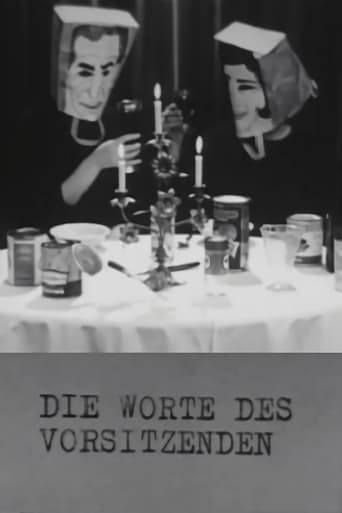
    I was on a ship – this sounds like a novel: I had just embarked for Venezuela on June 2, 1967 as the Shah of Iran was arriving in West Berlin. There were protests, a student was shot, and a new form of opposition movement came into existence. The idea for this film came to me while I was still aboard the ship. The film is structured like a commercial. The film takes a metaphor literally: words can become weapons. However, it also shows that these weapons are made of paper. The weapon spoiled everything for the Shah and his wife, they are wearing paper bags on their heads with faces drawn on them – the kind of bags worn by Iranian students during demonstrations to hide their identity from the Savak, the Iranian Secret Service. When I showed this film to the audiences in the late 60s, it was highly praised. I think people understood then that over obviousness is also a form of irony. This capacity was lost a few years later. I think it's coming back today. –HF

    img
  • 2006
    imgMovies

    Am Rand der Städte

    Am Rand der Städte

    1 2006 HD

    Documentary about turkish expats returning to Turkey.

    img
  • 1968
    imgMovies

    Untitled or: The Wandering Cinema for Engineering Students

    Untitled or: The Wandering Cinema for Engineering Students

    1 1968 HD

    The film Wanderkino für Ingenieurstudenten was part of the extra-parliamentary opposition's (APO) so-called 'technology campaign' aimed at politicizing the students at the technical universities and schools of engineering.

    img
  • 1968
    imgMovies

    Three Shots at Rudi

    Three Shots at Rudi

    1 1968 HD

    On Easter 1968 an assassination attempt on Rudi Dutschke was carried out. Shortly afterwards street battles resulted throughout West Germany. Farocki's short film Drei Schüsse auf Rudi is presumably lost.

    img
  • 1991
    imgMovies

    Images of the World and the Inscription of War

    Images of the World and the Inscription of War

    6.5 1991 HD

    Farocki’s intriguing and troubling film explores the processes of visual perception and how they affect our understanding of history and society. In a work reminiscent of the writings of Paul Virilio and Michel Foucault, Farocki examines a range of phenomena including aerial reconnaissance photos of the Auschwitz concentration camp.

    img
  • 1968
    imgMovies

    Their Newspapers

    Their Newspapers

    6 1968 HD

    Ihre Zeitungen is a political film rooted in the 1968 student campaign against the Springer press group, which controlled popular dailies such as the Berliner Zeitung and the Bild Zeitung. Claiming the latter were manipulating public opinion, the students laid siege to the publisher's offices. These events made a strong impression on the German collective conscience, and it's in this context that Farocki made this "agit-prop" film.

    img
  • 1968
    imgMovies

    Their Newspapers

    Their Newspapers

    6 1968 HD

    Ihre Zeitungen is a political film rooted in the 1968 student campaign against the Springer press group, which controlled popular dailies such as the Berliner Zeitung and the Bild Zeitung. Claiming the latter were manipulating public opinion, the students laid siege to the publisher's offices. These events made a strong impression on the German collective conscience, and it's in this context that Farocki made this "agit-prop" film.

    img
  • 2011
    imgMovies

    Serious Games 1–4

    Serious Games 1–4

    1 2011 HD

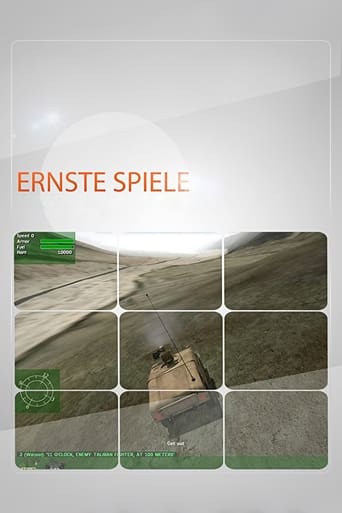
    Harun Farocki: Serious Games I–IV (2009–10) explores the use of virtual reality and gaming technology in U.S. military recruitment, training and after-action therapy, revealing fundamental links between technology and violence in a time of war. Young recruits engage in simulated combat training, which barely differs from video games produced as entertainment. Footage is included from a workshop demonstrating the use of computer re-enactments in the psychological care of veterans suffering from post-traumatic stress disorder. As a large-scale installation, Serious Games critically focuses on the role of audiovisual culture in the spectacle of war.

    img
  • 1975
    imgMovies

    About ‘Song of Ceylon’ by Basil Wright

    About ‘Song of Ceylon’ by Basil Wright

    1 1975 HD

    Song of Ceylon was commissioned for the short-lived German TV-series Telekritik and broadcasted in 1975. In Telekritik documentary approaches were analysed and made available for a critique of contemporary TV, its aesthetics and modes of production. Other authors for the series include Hartmut Bitomsky, Rainer Gansera and Klaus Wildenhahn.In the 30-minute movie, Farocki shows and comments on excerpts from the film Song of Ceylon by Basil Wright (and a short segment of Eisenstein's Mexico-fragments). Farocki's voice-over describes part of the movie, focussing on details and montage. He also uses didactic and descriptive drawings and intertitles to confront the classic documentary and its stylistic approaches with contemporary TV.

    img
  • 2007
    imgMovies

    Respite

    Respite

    6.3 2007 HD

    Respite consists of silent black-and-white film shot at Westerbork, a Dutch refugee camp established in 1939 for Jews fleeing Germany. In 1942, after the occupation of Holland, its function was reversed by the Nazis and it became a 'transit camp.' In 1944, the camp commander commissioned a film, shot by a photographer, Rudolph Breslauer. “By exhuming the scattered fragments and traces of the phantom film (intertitle cards, ideas for the scenario, graphic elements), Harun Farocki inscribes the Dutch footage within the genre of the corporate film.

    img
  • 2007
    imgMovies

    Respite

    Respite

    6.3 2007 HD

    Respite consists of silent black-and-white film shot at Westerbork, a Dutch refugee camp established in 1939 for Jews fleeing Germany. In 1942, after the occupation of Holland, its function was reversed by the Nazis and it became a 'transit camp.' In 1944, the camp commander commissioned a film, shot by a photographer, Rudolph Breslauer. “By exhuming the scattered fragments and traces of the phantom film (intertitle cards, ideas for the scenario, graphic elements), Harun Farocki inscribes the Dutch footage within the genre of the corporate film.

    img
  • 1984
    imgMovies

    The Double Face of Peter Lorre

    The Double Face of Peter Lorre

    5.3 1984 HD

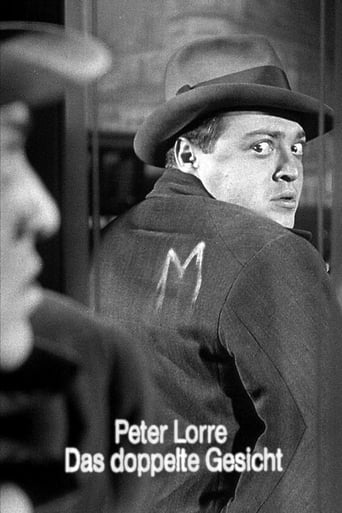
    Peter Lorre achieved international fame for his performance in the myth-making role in M. This character has held a peculiar fascination for generations of cinephiles. However, at the time, whilst such success meant recognition, it also weighed on the Hungarian actor as a constrictive burden. Using photographs and film extracts, Das doppelte Gesicht reconstructs the ups and downs of Lorre's career, taking into consideration the economic imperatives and workings of the film industry at the time. (Arnold Hohmann, 1984)

    img
  • 1997
    imgMovies

    The Expression of Hands

    The Expression of Hands

    5.8 1997 HD

    Historically, the cinema close-up was initially employed to convey emotions through facial expressions. But soon filmmakers also began focusing their attention on hands. Using film extracts, Farocki explores this visual language, its symbolism, Freudian slips, automatisms and its music. Often, hands betray an emotion which the face tries to dissimulate. They can also function as a conduit (exchanging money) or witness to a form of competence (work).

    img
  • 1978
    imgMovies

    Between Two Wars

    Between Two Wars

    6 1978 HD

    A film about the time of the blast furnaces – 1917–1933 – about the development of an industry, about perfect machinery which had to run itself to the point of its own destruction.

    img
  • 1986
    imgMovies

    Schlagworte – Schlagbilder. Ein Gespräch mit Vilém Flusser

    Schlagworte – Schlagbilder. Ein Gespräch mit Vilém Flusser

    5.6 1986 HD

    Harun Farocki sits down with Vilém Flusser to discuss the front page of the German tabloid newspaper Bild Zeitung.

    img
  • 1986
    imgMovies

    Schlagworte – Schlagbilder. Ein Gespräch mit Vilém Flusser

    Schlagworte – Schlagbilder. Ein Gespräch mit Vilém Flusser

    5.6 1986 HD

    Harun Farocki sits down with Vilém Flusser to discuss the front page of the German tabloid newspaper Bild Zeitung.

    img
  • 2001
    imgMovies

    The Creators of the Shopping Worlds

    The Creators of the Shopping Worlds

    6.3 2001 HD

    A look at how mall producers design malls in order to maximise traffic and sales.

    img
  • 1988
    imgMovies

    Georg K. Glaser – Writer and Smith

    Georg K. Glaser – Writer and Smith

    5.7 1988 HD

    Portrait of Georg Glaser, who is a writer in the mornings and a blacksmith in the afternoons.

    img
  • 1988
    imgMovies

    Georg K. Glaser – Writer and Smith

    Georg K. Glaser – Writer and Smith

    5.7 1988 HD

    Portrait of Georg Glaser, who is a writer in the mornings and a blacksmith in the afternoons.

    img
  • 1995
    imgMovies

    Pilots

    Pilots

    5.8 1995 HD

    Drifters tells of Karin, a past-her-prime cosmetics saleswoman, with her increasing exasperation with her life and her dreams of leaving it all behind and living in Paris. An unlikely but entertaining plot develops, where anything can happen.

    img
  • 2004
    imgMovies

    Counter-Music

    Counter-Music

    7 2004 HD

    The city today is as rationalised and regulated as a production process. The images which today determine the day of the city are operative images, control images. Representations of traffic regulation, by car, train or metro, representations determining the height at which mobile phone network transmitters are fixed, and where the holes in the networks are. Images from thermo-cameras to discover heat loss from buildings. And digital models of the city, portrayed with fewer shapes of buildings or roofs than were used in the 19th century when planned industrial cities arose, amongst them the Lille agglomeration. Despite their boulevards, promenades, market places, arcades and churches, these cities are already machines for living and working. I too want to "remake" the city films, but with different images. Limited time and means themselves demand concentration on just a few, archetypal chapters. Fragments, or preliminary studies.

    img
  • 1997
    imgMovies

    Documenta X - Die Filme

    Documenta X - Die Filme

    1 1997 HD

    img
  • 2005
    imgMovies

    A Way

    A Way

    1 2005 HD

    "If there is a relationship between production and destruction, between the development of productive and destructive forces, then the atom bomb is the ultimate weapon of the post-industrial age. Greatest tonnage, highest mortality, maximum devastation. But what comes next, what are the weapons of the post-industrial age?" - Harun Farocki

    img
  • 1979
    imgMovies

    Zur Ansicht: Peter Weiss

    Zur Ansicht: Peter Weiss

    1 1979 HD

    Interview film with Peter Weiss

    img
  • 1979
    imgMovies

    Zur Ansicht: Peter Weiss

    Zur Ansicht: Peter Weiss

    1 1979 HD

    Interview film with Peter Weiss

    img
  • 1968
    imgMovies

    White Christmas

    White Christmas

    4.5 1968 HD

    One of the many films drawing a connection between Christmas and war. It is unclear whether the longing for a white Christmas is being taken seriously, or whether it is intended as a denunciation. In either event, America's war in Vietnam is denounced. (Harun Farocki)

    img
  • 2020
    imgMovies

    Labour in a Single Shot

    Labour in a Single Shot

    1 2020 HD

    A few years ago, German artists Antje Ehmann and Harun Farocki conducted workshops on the subject of work in 15 cities around the world. The result was the creation of 400 short films depicting various faces of work in the modern world. Now Antje Ehmann and architect Luis Feduchi have returned to the project, this time with filmmakers from Warsaw and Berlin. Will the films made be able to show how the pandemic influenced work and professional reality? Can all the changes occurring be captured in the form of an image? Will the movies themselves change? The German title of the project "Eine Einstellung zur Arbeit" has a double meaning: it means working in one film take and at the same time an attitude towards work.

    img
  • 1995
    imgMovies

    Interface

    Interface

    5.3 1995 HD

    Harun Farocki was commissioned by the Lille Museum of Modern Art to produce a video 'about his work'. His creation was an installation for two screens that was presented within the scope for the 1995 exhibition The World of Photography. The work Schnittstelle developed out of that installation. Reflecting on Farocki's own documentary work, it examines the question of what it means to work with existing images rather than producing one's own, new images. The title plays on the double meaning of 'Schnitt', referring both to Farocki's workplace, the editing table, as well as the 'human-machine interface', where a person operates a computer using a keyboard and a mouse.

    img
  • 1995
    imgMovies

    Interface

    Interface

    5.3 1995 HD

    Harun Farocki was commissioned by the Lille Museum of Modern Art to produce a video 'about his work'. His creation was an installation for two screens that was presented within the scope for the 1995 exhibition The World of Photography. The work Schnittstelle developed out of that installation. Reflecting on Farocki's own documentary work, it examines the question of what it means to work with existing images rather than producing one's own, new images. The title plays on the double meaning of 'Schnitt', referring both to Farocki's workplace, the editing table, as well as the 'human-machine interface', where a person operates a computer using a keyboard and a mouse.

    img
  • 1987
    imgMovies

    Filmtip: Der Tod des Empedokles

    Filmtip: Der Tod des Empedokles

    1 1987 HD

    Harun Farocki Interviews Andreas von Rauch, lead actor in Straub-Huillet's "The Death of Empedocles.

    img
  • 1983
    imgMovies

    Jean-Marie Straub and Danièle Huillet at Work on a Film Based on Franz Kafka’s Amerika

    Jean-Marie Straub and Danièle Huillet at Work on a Film Based on Franz Kafka’s Amerika

    6.1 1983 HD

    This film is at once a self-portrait and an homage to Jean-Marie Straub, Farocki's role model and former teacher at the Film Academy.

    img
  • 1983
    imgMovies

    Jean-Marie Straub and Danièle Huillet at Work on a Film Based on Franz Kafka’s Amerika

    Jean-Marie Straub and Danièle Huillet at Work on a Film Based on Franz Kafka’s Amerika

    6.1 1983 HD

    This film is at once a self-portrait and an homage to Jean-Marie Straub, Farocki's role model and former teacher at the Film Academy.

    img
  • 1987
    imgMovies

    Filmtip: Der Tod des Empedokles

    Filmtip: Der Tod des Empedokles

    1 1987 HD

    Harun Farocki Interviews Andreas von Rauch, lead actor in Straub-Huillet's "The Death of Empedocles.

    img
  • 1987
    imgMovies

    Filmtip: Der Tod des Empedokles

    Filmtip: Der Tod des Empedokles

    1 1987 HD

    Harun Farocki Interviews Andreas von Rauch, lead actor in Straub-Huillet's "The Death of Empedocles.

    img
  • 1969
    imgMovies

    The Inextinguishable Fire

    The Inextinguishable Fire

    6.2 1969 HD

    An austere treatise on the military-industrial complex that produces napalm.

    img
  • 1969
    imgMovies

    The Inextinguishable Fire

    The Inextinguishable Fire

    6.2 1969 HD

    An austere treatise on the military-industrial complex that produces napalm.

    img
  • 1969
    imgMovies

    The Inextinguishable Fire

    The Inextinguishable Fire

    6.2 1969 HD

    An austere treatise on the military-industrial complex that produces napalm.

    img
  • 1985
    imgMovies

    Betrayed

    Betrayed

    1 1985 HD

    A “film-noir” on double identity and role reversal. A man is looking for a woman to love. He finds her in a seedy bar and persuades her to marry him. The day she decides to flee… he kills her. To ward off suspicion, he moves in with the sister of the deceased.

    img
  • 2010
    imgMovies

    Serious Games 2 – Three Dead

    Serious Games 2 – Three Dead

    1 2010 HD

    An exploration of how the U.S. military employs video game technology to train troops for war. Three Dead depicts a military exercise within a mock Iraqi town built on the outskirts of Twentynine Palms, California, blurring the line between computer simulation and reality.

    img
  • 2010
    imgMovies

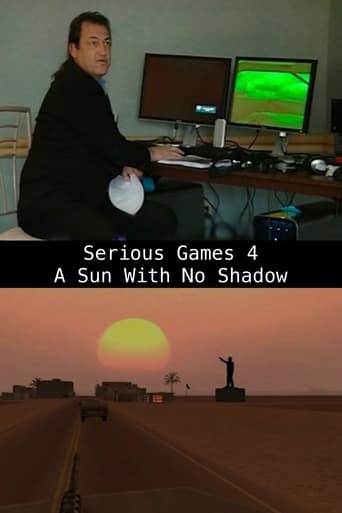
    Serious Games 4 – A Sun With No Shadow

    Serious Games 4 – A Sun With No Shadow

    1 2010 HD

    An exploration of how the U.S. military employs video game technology to train troops for war. In A Sun With No Shadow, Farocki calls attention to the subtle differences between the simulations for combat training and PTSD. With the former, the sun can be programmed to cast shadows in the virtual combat zones, while the latter, less expensive technology does not offer this feature.

    img
  • 2010
    imgMovies

    Serious Games 4 – A Sun With No Shadow

    Serious Games 4 – A Sun With No Shadow

    1 2010 HD

    An exploration of how the U.S. military employs video game technology to train troops for war. In A Sun With No Shadow, Farocki calls attention to the subtle differences between the simulations for combat training and PTSD. With the former, the sun can be programmed to cast shadows in the virtual combat zones, while the latter, less expensive technology does not offer this feature.

    img
  • 2010
    imgMovies

    Serious Games 4 – A Sun With No Shadow

    Serious Games 4 – A Sun With No Shadow

    1 2010 HD

    An exploration of how the U.S. military employs video game technology to train troops for war. In A Sun With No Shadow, Farocki calls attention to the subtle differences between the simulations for combat training and PTSD. With the former, the sun can be programmed to cast shadows in the virtual combat zones, while the latter, less expensive technology does not offer this feature.

    img
  • 2010
    imgMovies

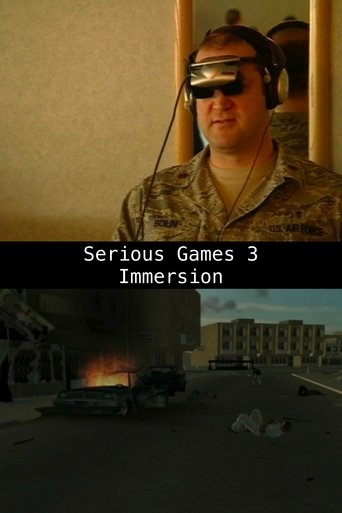
    Serious Games 3 – Immersion

    Serious Games 3 – Immersion

    1 2010 HD

    An exploration of how the U.S. military employs video game technology to train troops for war. In Immersion, Farocki presents footage of a role-playing exercise in which military psychologists demonstrate how to use the PTSD program on their colleagues, who describe traumatic wartime experiences. On a second channel, their descriptions play out as virtual renderings.

    img
  • 2010
    imgMovies

    Serious Games 3 – Immersion

    Serious Games 3 – Immersion

    1 2010 HD

    An exploration of how the U.S. military employs video game technology to train troops for war. In Immersion, Farocki presents footage of a role-playing exercise in which military psychologists demonstrate how to use the PTSD program on their colleagues, who describe traumatic wartime experiences. On a second channel, their descriptions play out as virtual renderings.

    img
  • 2010
    imgMovies

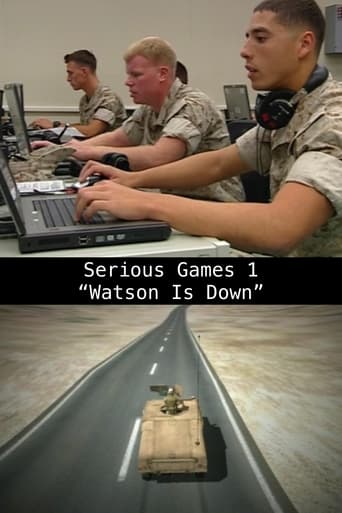
    Serious Games 1 – "Watson Is Down"

    Serious Games 1 – "Watson Is Down"

    1 2010 HD

    An exploration of how the U.S. military employs video game technology to train troops for war. Filmed at the United States Marine Corps Air Ground Combat Center, Watson is Down pairs footage of soldiers at computers engaging in combat-simulation training with scenes from the video games.

    img
  • 2010
    imgMovies

    Serious Games 2 – Three Dead

    Serious Games 2 – Three Dead

    1 2010 HD

    An exploration of how the U.S. military employs video game technology to train troops for war. Three Dead depicts a military exercise within a mock Iraqi town built on the outskirts of Twentynine Palms, California, blurring the line between computer simulation and reality.

    img
  • 2010
    imgMovies

    Serious Games 3 – Immersion

    Serious Games 3 – Immersion

    1 2010 HD

    An exploration of how the U.S. military employs video game technology to train troops for war. In Immersion, Farocki presents footage of a role-playing exercise in which military psychologists demonstrate how to use the PTSD program on their colleagues, who describe traumatic wartime experiences. On a second channel, their descriptions play out as virtual renderings.

    img
  • 2010
    imgMovies

    Serious Games 1 – "Watson Is Down"

    Serious Games 1 – "Watson Is Down"

    1 2010 HD

    An exploration of how the U.S. military employs video game technology to train troops for war. Filmed at the United States Marine Corps Air Ground Combat Center, Watson is Down pairs footage of soldiers at computers engaging in combat-simulation training with scenes from the video games.

    img
  • 2010
    imgMovies

    Serious Games 1 – "Watson Is Down"

    Serious Games 1 – "Watson Is Down"

    1 2010 HD

    An exploration of how the U.S. military employs video game technology to train troops for war. Filmed at the United States Marine Corps Air Ground Combat Center, Watson is Down pairs footage of soldiers at computers engaging in combat-simulation training with scenes from the video games.

    img
  • 2010
    imgMovies

    Serious Games 2 – Three Dead

    Serious Games 2 – Three Dead

    1 2010 HD

    An exploration of how the U.S. military employs video game technology to train troops for war. Three Dead depicts a military exercise within a mock Iraqi town built on the outskirts of Twentynine Palms, California, blurring the line between computer simulation and reality.

    img
  • 2007
    imgMovies

    Yella

    Yella

    6.2 2007 HD

    A young East German woman leaves her husband and business partner and relocates to a West German city to start anew as an accountant, but he soon catches up with her.

    img
  • 2014
    imgMovies

    Phoenix

    Phoenix

    6.8 2014 HD

    German-Jewish cabaret singer Nelly survived Auschwitz but had to undergo reconstructive surgery as her face was disfigured. Without recognizing Nelly, her former husband Johnny asks her to help him claim his wife’s inheritance. To see if he betrayed her, she agrees, becoming her own doppelganger.

    img
  • 1975
    imgMovies

    About ‘Song of Ceylon’ by Basil Wright

    About ‘Song of Ceylon’ by Basil Wright

    1 1975 HD

    Song of Ceylon was commissioned for the short-lived German TV-series Telekritik and broadcasted in 1975. In Telekritik documentary approaches were analysed and made available for a critique of contemporary TV, its aesthetics and modes of production. Other authors for the series include Hartmut Bitomsky, Rainer Gansera and Klaus Wildenhahn.In the 30-minute movie, Farocki shows and comments on excerpts from the film Song of Ceylon by Basil Wright (and a short segment of Eisenstein's Mexico-fragments). Farocki's voice-over describes part of the movie, focussing on details and montage. He also uses didactic and descriptive drawings and intertitles to confront the classic documentary and its stylistic approaches with contemporary TV.

    img
  • 1973
    imgMovies

    The Trouble with Images. A Critique of Television

    The Trouble with Images. A Critique of Television

    1 1973 HD

    Refreshingly, Farocki lays his cards on the table at the very beginning of the film, “I want to demonstrate that most feature films are of the sort that make people lose their interest and appetite for the real world”.

    img
  • 1967
    imgMovies

    The Campaign Volunteer

    The Campaign Volunteer

    1 1967 HD

    Der Wahlhelfer deals with the development of a young trainee lawyer and FDP (Free Democrat Party) supporter who becomes a revolutionary.

    img
  • 1968
    imgMovies

    White Christmas

    White Christmas

    4.5 1968 HD

    One of the many films drawing a connection between Christmas and war. It is unclear whether the longing for a white Christmas is being taken seriously, or whether it is intended as a denunciation. In either event, America's war in Vietnam is denounced. (Harun Farocki)

    img
  • 1967
    imgMovies

    The Campaign Volunteer

    The Campaign Volunteer

    1 1967 HD

    Der Wahlhelfer deals with the development of a young trainee lawyer and FDP (Free Democrat Party) supporter who becomes a revolutionary.

    img
  • 1968
    imgMovies

    White Christmas

    White Christmas

    4.5 1968 HD

    One of the many films drawing a connection between Christmas and war. It is unclear whether the longing for a white Christmas is being taken seriously, or whether it is intended as a denunciation. In either event, America's war in Vietnam is denounced. (Harun Farocki)

    img
  • 1970
    imgMovies

    Häuser 1–2

    Häuser 1–2

    1 1970 HD

    img
  • 2012
    imgMovies

    Barbara

    Barbara

    7.2 2012 HD

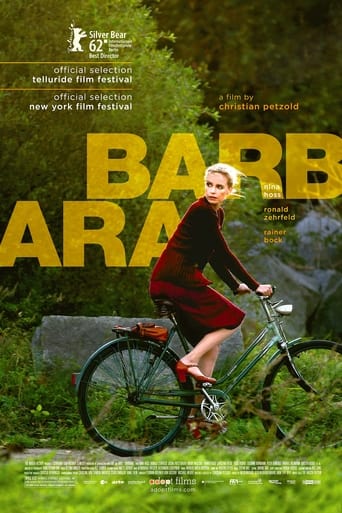
    In 1980s East Germany, Barbara is a Berlin doctor banished to a country medical clinic for applying for an exit visa. Deeply unhappy with her reassignment and fearful of her co-workers as possible Stasi informants, Barbara stays aloof, especially from the good natured clinic head, Andre.

    img
  • 1966
    imgMovies

    Everybody a Berliner Kindl

    Everybody a Berliner Kindl

    1 1966 HD

    Advertising posters for the Berliner Kindl brewery in the stands of Berlin’s sports arena show beer drinkers through the ages, from an organ-grinder at the turn of the 20th century to a fashionable "Beatle wannabe". A critical analysis of the images leads to the parody motto "Berliner Kindl is a swindle".

    img
  • 1966
    imgMovies

    Everybody a Berliner Kindl

    Everybody a Berliner Kindl

    1 1966 HD

    Advertising posters for the Berliner Kindl brewery in the stands of Berlin’s sports arena show beer drinkers through the ages, from an organ-grinder at the turn of the 20th century to a fashionable "Beatle wannabe". A critical analysis of the images leads to the parody motto "Berliner Kindl is a swindle".

    img
  • 1968
    imgMovies

    Their Newspapers

    Their Newspapers

    6 1968 HD

    Ihre Zeitungen is a political film rooted in the 1968 student campaign against the Springer press group, which controlled popular dailies such as the Berliner Zeitung and the Bild Zeitung. Claiming the latter were manipulating public opinion, the students laid siege to the publisher's offices. These events made a strong impression on the German collective conscience, and it's in this context that Farocki made this "agit-prop" film.

    img
  • 1979
    imgMovies

    The Taste of Life

    The Taste of Life

    1 1979 HD

    For years I've been looking for the means to capture everyday life just as it is perceived through a glance from the street. Twenty years ago, you could see young people standing with their bicycles on street corners, in fact, if the bicycles where there, you could be sure to find the young people standing there talking. I would like to document these kinds of events. On this occasion, I was presented with the opportunity to do so. For two and a half weeks, I walked around different parts of the city with my camera and collected images for the film. (Harun Farocki, 1979)

    img
  • 1978
    imgMovies

    A Picture of Sarah Schumann

    A Picture of Sarah Schumann

    1 1978 HD

    This Harun Farocki film shows the creation of a picture on which the artist worked for nine weeks. Sarah Schumann lives in Berlin and is a pioneer of the feminist scene. 1977 together with several other artists she organized the first large exhibition in which only work by women was shown. Sarah Schumann paints figuratively, that is to say she has developed a technique using layers of collage and painting worked on top of and into one another. Regarding a picture becomes an adventure. (harunfarocki.de)

    img
  • 2025
    imgMovies

    About Narration

    About Narration

    1 2025 HD

    Interdisciplinary studies put into practice is a plane on which HaF's interests and mine coincide. Ideas of fictional research projects in films emerge very early on, or of film as research device, allowing people from different disciplines to come together and discover something, to pursue a line of thought, or just be adventurous. These ideas correspond to a tendency we both have of accumulating knowledge from different sciences, for example so as to bring exact sciences like medicine together with subjects which aren't directly aimed at application, such as religious studies or anthropology.

    img
  • 2010
    imgMovies

    The Silver and the Cross

    The Silver and the Cross

    1 2010 HD

    The work examines the painting Depiction of the Cerro Rico and the Imperial City of Potosí (Oil on canvas, 262 x 181 cm) by Gaspar Miguel des Berrío, 1758, in the Museo Colonial Charcas de la Universidad San Francisco Xavier, Sucre / Bolivia.

    img
  • 2007
    imgMovies

    Deep Play

    Deep Play

    1 2007 HD

    Harun Farocki’s work Deep Play is made up of various perspectives on the final of the 2006 World Cup.

    img
  • 1982
    imgMovies

    Filme von Peter Weiss

    Filme von Peter Weiss

    1 1982 HD

    An introduction to films by Peter Weiss: "Study II" (1952) "Study IV" (1954)" According to the Law" (1957) "Shaded Faces" (1956 ) "What should we do now? "(1958).

    img
  • 1990
    imgMovies

    Kinostadt Paris

    Kinostadt Paris

    1 1990 HD

    Short documentary vignettes and interviews revolving around cinephile life in Paris.

    img
  • 1989
    imgMovies

    Image und Umsatz, oder: Wie kann man einen Schuh darstellen?

    Image und Umsatz, oder: Wie kann man einen Schuh darstellen?

    1 1989 HD

    An ad agency creates a new campaign for a shoe company.

    img
  • 1994
    imgMovies

    Re-education

    Re-education

    1 1994 HD

    Farocki revisits the executive trainer from his earlier "Die Schulung" (Indoctrination, 1987), this time holding a seminar with ex-GDR employees of a West German construction company.

    img
  • 2025
    imgMovies

    The Words of the Chairman

    The Words of the Chairman

    1 2025 HD

    I was on a ship – this sounds like a novel: I had just embarked for Venezuela on June 2, 1967 as the Shah of Iran was arriving in West Berlin. There were protests, a student was shot, and a new form of opposition movement came into existence. The idea for this film came to me while I was still aboard the ship. The film is structured like a commercial. The film takes a metaphor literally: words can become weapons. However, it also shows that these weapons are made of paper. The weapon spoiled everything for the Shah and his wife, they are wearing paper bags on their heads with faces drawn on them – the kind of bags worn by Iranian students during demonstrations to hide their identity from the Savak, the Iranian Secret Service. When I showed this film to the audiences in the late 60s, it was highly praised. I think people understood then that over obviousness is also a form of irony. This capacity was lost a few years later. I think it's coming back today. –HF

    img
  • 2008
    imgMovies

    Feasting or Flying

    Feasting or Flying

    1 2008 HD

    Feasting or Flying by Harun Farocki and Antje Ehmann alludes to the statement: "Some dissect a bird in order to eat it, others in order to discover how to fly". A six- channel deconstruction of the tragic male hero in cinema.

    img
  • 2006
    imgMovies

    Dubbing

    Dubbing

    1 2006 HD

    A soliloquy by Robert de Niro. The ever same image, the words in seven languages.

    img
  • 2006
    imgMovies

    On Construction of Griffith’s Films

    On Construction of Griffith’s Films

    1 2006 HD

    In On Construction of Griffith' Films we picked a sequence from Griffith Intolerance (1916). It shows a dialogue between a man and a woman, filmed and edited as shot and counter shot. We reproduce the shot on two monitors to reveal its narrative character and also because analysis requires us to dissect something. The narrative form of shot / counter shot, which would later become the norm for depicting dialogue in film, remains novel here. A few years earlier Griffith had still used tracking shots to tell his stories. In The Lonedale Operator (1911), cuts were made only when the scene changed; a cut in the movie's story line. In Intolerance, cinematography had already achieved such a level of independence that it was the camera that constituted a room with it's detail. -Harun Farocki

    img
  • 1994
    imgMovies

    Re-education

    Re-education

    1 1994 HD

    Farocki revisits the executive trainer from his earlier "Die Schulung" (Indoctrination, 1987), this time holding a seminar with ex-GDR employees of a West German construction company.

    img
  • 1991
    imgMovies

    Images of the World and the Inscription of War

    Images of the World and the Inscription of War

    6.5 1991 HD

    Farocki’s intriguing and troubling film explores the processes of visual perception and how they affect our understanding of history and society. In a work reminiscent of the writings of Paul Virilio and Michel Foucault, Farocki examines a range of phenomena including aerial reconnaissance photos of the Auschwitz concentration camp.

    img
  • 2009
    imgMovies

    In Comparison

    In Comparison

    6.6 2009 HD

    In Comparison revisits issues explored in the director's 2007 two channel installation Comparison Via a Third. Spanning continents and cultures, the film focuses on the brick in its many contexts, from the collective efforts of a community building a clinic in Burkina Faso, through semi industrialized moldings in India, to industrial production lines in Germany, France, Austria and Switzerland. Through its notable structure and its captivating rhythms, In Comparison presents various methods of labor production, allowing for an assessment that changes with every layer and goes well beyond a simple binary divide.

    img
  • 1977
    imgMovies

    Bedtime Stories: Railways

    Bedtime Stories: Railways

    1 1977 HD

    "As if pictures could think! Einschlafgeschichten doesn't really speak of bridges or railroads but rather of two girls filling the space between daytime and dreamtime with a poetic game, an endless game, a game with no end. A game which can fade out without becoming fragmentary. "Are you asleep?", one of them asks at the end of a clip – and the final shot is of the two, asleep; the game is over. The girls are played by Lara and Anna, Farocki's daughters." - Hans J. Wulff

    img
  • 1977
    imgMovies

    Bedtime Stories: Cat

    Bedtime Stories: Cat

    1 1977 HD

    "As if pictures could think! Einschlafgeschichten doesn't really speak of bridges or railroads but rather of two girls filling the space between daytime and dreamtime with a poetic game, an endless game, a game with no end. A game which can fade out without becoming fragmentary. "Are you asleep?", one of them asks at the end of a clip – and the final shot is of the two, asleep; the game is over. The girls are played by Lara and Anna, Farocki's daughters." - Hans J. Wulff

    img
  • 1977
    imgMovies

    Bedtime Stories: Ships

    Bedtime Stories: Ships

    1 1977 HD

    "As if pictures could think! Einschlafgeschichten doesn't really speak of bridges or railroads but rather of two girls filling the space between daytime and dreamtime with a poetic game, an endless game, a game with no end. A game which can fade out without becoming fragmentary. "Are you asleep?", one of them asks at the end of a clip – and the final shot is of the two, asleep; the game is over. The girls are played by Lara and Anna, Farocki's daughters." - Hans J. Wulff

    img
  • 1977
    imgMovies

    Bedtime Stories: Bridges

    Bedtime Stories: Bridges

    1 1977 HD

    "As if pictures could think! Einschlafgeschichten doesn't really speak of bridges or railroads but rather of two girls filling the space between daytime and dreamtime with a poetic game, an endless game, a game with no end. A game which can fade out without becoming fragmentary. "Are you asleep?", one of them asks at the end of a clip – and the final shot is of the two, asleep; the game is over. The girls are played by Lara and Anna, Farocki's daughters."

    img
  • 1970
    imgMovies

    Die Teilung aller Tage

    Die Teilung aller Tage

    1 1970 HD

    A worker is sitting at a conveyor belt on which light bulbs are coming in at regular intervals. He takes the light bulbs from the conveyor belt and inserts them into a testing device. The light bulbs light up briefly and bathe the scene in glistening light. The worker puts the light bulb back on the conveyor belt, looks directly into the camera and shouts against the noise of the machines: "We create wealth."

    img
  • 1966
    imgMovies

    Two Paths

    Two Paths

    1 1966 HD

    This short piece for the television station Sender Freies Berlin (SFB) is highly relevant to Farocki's later work. Zwei Wege is a cheeky description of a picture; Farocki shows us an image, a religious allegory showing the 'right' and the 'wrong' path for a Christian. The one path leads to heaven, the other to hell. Farocki uses the camera in effect to dissect the picture; he shows close-ups of the paintings various motifs, which he underscores with rhymes. This method of breaking down an image with the camera reminds us of similar sequences in his essay films, namely Wie man sieht and Bilder der Welt und Inschrift des Krieges.

    img
  • 1969
    imgMovies

    Instructions on how to Pull off Police Helmets

    Instructions on how to Pull off Police Helmets

    1 1969 HD

    According to Fritz J. Raddatz, Rosa Luxemburg cried when she read Marx's concept of value. I was just as disappointed by the Cine-Tracts made in May 1968 in Paris and shown shortly afterwards in Berlin.
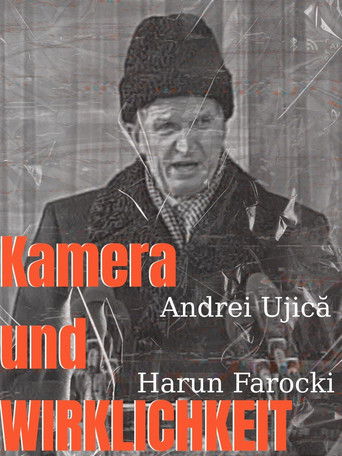
    img
  • 1966
    imgMovies

    Two Paths

    Two Paths

    1 1966 HD

    This short piece for the television station Sender Freies Berlin (SFB) is highly relevant to Farocki's later work. Zwei Wege is a cheeky description of a picture; Farocki shows us an image, a religious allegory showing the 'right' and the 'wrong' path for a Christian. The one path leads to heaven, the other to hell. Farocki uses the camera in effect to dissect the picture; he shows close-ups of the paintings various motifs, which he underscores with rhymes. This method of breaking down an image with the camera reminds us of similar sequences in his essay films, namely Wie man sieht and Bilder der Welt und Inschrift des Krieges.
    img
  • 1969
    imgMovies

    Untitled or: Nixon comes to Berlin

    Untitled or: Nixon comes to Berlin

    1 1969 HD

    img
  • 1969
    imgMovies

    Instructions on how to Pull off Police Helmets

    Instructions on how to Pull off Police Helmets

    1 1969 HD

    According to Fritz J. Raddatz, Rosa Luxemburg cried when she read Marx's concept of value. I was just as disappointed by the Cine-Tracts made in May 1968 in Paris and shown shortly afterwards in Berlin.

    img
  • 1969
    imgMovies

    Untitled or: Nixon comes to Berlin

    Untitled or: Nixon comes to Berlin

    1 1969 HD

    img
  • 1969
    imgMovies

    Instructions on how to Pull off Police Helmets

    Instructions on how to Pull off Police Helmets

    1 1969 HD

    According to Fritz J. Raddatz, Rosa Luxemburg cried when she read Marx's concept of value. I was just as disappointed by the Cine-Tracts made in May 1968 in Paris and shown shortly afterwards in Berlin.

    img
  • 1969
    imgMovies

    Instructions on how to Pull off Police Helmets

    Instructions on how to Pull off Police Helmets

    1 1969 HD

    According to Fritz J. Raddatz, Rosa Luxemburg cried when she read Marx's concept of value. I was just as disappointed by the Cine-Tracts made in May 1968 in Paris and shown shortly afterwards in Berlin.

    img
  • 1969
    imgMovies

    Untitled or: Nixon comes to Berlin

    Untitled or: Nixon comes to Berlin

    1 1969 HD

    img
  • 2025
    imgMovies

    Make Up

    Make Up

    1 2025 HD

    “The make-up artist Serge Lutens is shown covering a model’s face with powder then working it into her face over several minutes. The face becomes a canvas, primed for painting. Flesh is turned into something different, looking like marble. It seems as though life has to be frozen in order to achieve beauty.” –Harun Farocki

    img
  • 2025
    imgMovies

    Remember Tomorrow is the First Day of the Rest of Your Life

    Remember Tomorrow is the First Day of the Rest of Your Life

    1 2025 HD

    “Farocki’s ten-minute short film is composed of shots of an AFN DJ at work…and of a car ride, whereby the camera points out of the car (through the windscreen or the side windows) or it captures and tracks a passing car.” –Gero Günther

    img
  • 1999
    imgMovies

    Deutsche Polizisten: Viele Kulturen - eine Truppe

    Deutsche Polizisten: Viele Kulturen - eine Truppe

    1 1999 HD

    Documentary about the german police force.

    img
  • 1978
    imgMovies

    A Picture of Sarah Schumann

    A Picture of Sarah Schumann

    1 1978 HD

    This Harun Farocki film shows the creation of a picture on which the artist worked for nine weeks. Sarah Schumann lives in Berlin and is a pioneer of the feminist scene. 1977 together with several other artists she organized the first large exhibition in which only work by women was shown. Sarah Schumann paints figuratively, that is to say she has developed a technique using layers of collage and painting worked on top of and into one another. Regarding a picture becomes an adventure. (harunfarocki.de)

    img
  • 2015
    imgMovies

    As If We Were Somebody Else

    As If We Were Somebody Else

    1 2015 HD

    15-year-old Nike is torn between her wish of belonging to the cool clique around her friend Jess and individual autonomy, which to her is represented by her new friend Lea. When she takes Lea along to a party she does not know how to react to the competing friends - resulting in her not reacting at all. - The film deals with mechanisms of inclusion and exclusion the disorientation of young girls, whose identities are rather theatrically claimed then actually realized – a Brechtian teen drama.

    img
  • 1982
    imgMovies

    Filme von Peter Weiss

    Filme von Peter Weiss

    1 1982 HD

    An introduction to films by Peter Weiss: "Study II" (1952) "Study IV" (1954)" According to the Law" (1957) "Shaded Faces" (1956 ) "What should we do now? "(1958).

    img
  • 1979
    imgMovies

    Industry and Photography

    Industry and Photography

    1 1979 HD

    Farocki frequently chooses a single news photo as his pretext. In his film he explains convincingly that 'learning from images' is not so much a question of having power over the image or a consistent subject-position towards the image, which would allow the filmmaker access to complete knowledge. Instead he insists on pursuing photography's separation of reference and discourse, by proving this to be a separation of the subject as well as a separation within the subject itself. [...] - Thomas Elsaesser

    img
  • 1986
    imgMovies

    Filmbooks

    Filmbooks

    1 1986 HD

    A review of film books old and new.

    img
  • 1991
    imgMovies

    What’s Up?

    What’s Up?

    1 1991 HD

    How a look can be turned toward its goal by grasping and measuring its covetousness is shown in an exemplary fashion in What's Up? in a motif depicting a postcard of a painting by Titian in an eye-mark recorder.

    img
  • 1992
    imgMovies

    Videograms of a Revolution

    Videograms of a Revolution

    7.8 1992 HD

    Videograms of a Revolution is a 1992 documentary film compiled by Harun Farocki and Andrei Ujică from over 125 hours of amateur footage, news footage, and excerpts from the Bucharest TV studio overtaken by demonstrators as part of the December 1989 Romanian Revolution.

    img
  • 1995
    imgMovies

    Workers Leaving the Factory

    Workers Leaving the Factory

    5.8 1995 HD

    Using one of the Lumière Brothers' first films of workers leaving the Factory as his starting point, Farocki provides an insight to changes in industrial production, workers' strikes and motion pictures-- via images of workers leaving factories throughout the years.

    img
  • 1971
    imgMovies

    Something Self Explanatory (15x)

    Something Self Explanatory (15x)

    1 1971 HD

    An educational film about an aspect of political economy. The concepts of use value, barter value and labor as a commodity are the subjects; they are intended to introduce the process of understanding the theory of value of work and the law of values, alienation and fetish.

    img
  • 1971
    imgMovies

    Something Self Explanatory (15x)

    Something Self Explanatory (15x)

    1 1971 HD

    An educational film about an aspect of political economy. The concepts of use value, barter value and labor as a commodity are the subjects; they are intended to introduce the process of understanding the theory of value of work and the law of values, alienation and fetish.

    img
  • 2009
    imgMovies

    In Comparison

    In Comparison

    6.6 2009 HD

    In Comparison revisits issues explored in the director's 2007 two channel installation Comparison Via a Third. Spanning continents and cultures, the film focuses on the brick in its many contexts, from the collective efforts of a community building a clinic in Burkina Faso, through semi industrialized moldings in India, to industrial production lines in Germany, France, Austria and Switzerland. Through its notable structure and its captivating rhythms, In Comparison presents various methods of labor production, allowing for an assessment that changes with every layer and goes well beyond a simple binary divide.

    img
  • 1992
    imgMovies

    Videograms of a Revolution

    Videograms of a Revolution

    7.8 1992 HD

    Videograms of a Revolution is a 1992 documentary film compiled by Harun Farocki and Andrei Ujică from over 125 hours of amateur footage, news footage, and excerpts from the Bucharest TV studio overtaken by demonstrators as part of the December 1989 Romanian Revolution.

    img
  • 1985
    imgMovies

    Film-Tip: Le thé au harem d’Archimède

    Film-Tip: Le thé au harem d’Archimède

    5 1985 HD

    img
  • 2007
    imgMovies

    Comparison via a Third

    Comparison via a Third

    1 2007 HD

    Vergleich über ein Drittes is about the concept of work, as reflected in the example of the manufacture and processing of bricks. Harun Farocki shows working procedures in traditional, newly industrializing, and highly industrialized societies. The seated woman worker was filmed in India. There follows footage of brick manufactoring in Mumbai, Nimbut, and Pune in single and double projections, as well as images shot in industrialized Europe that jump back and forth or are projected side by side. After this initial presentation of increasingly automated manufacturing processes, the subsequent work steps in the various lacations and societies are related to one another in a series of different constellations.

    img
  • 1973
    imgMovies

    Einmal wirst auch du mich lieben. Über die Bedeutung von Heftromanen

    Einmal wirst auch du mich lieben. Über die Bedeutung von Heftromanen

    1 1973 HD

    img
  • 1973
    imgMovies

    Einmal wirst auch du mich lieben. Über die Bedeutung von Heftromanen

    Einmal wirst auch du mich lieben. Über die Bedeutung von Heftromanen

    1 1973 HD

    img
  • 1975
    imgMovies

    Bent or Broken

    Bent or Broken

    1 1975 HD

    A darkly comedic exploration of personal struggle and societal pressure, we follow the story of a middle-aged man named Max, who is trapped in a life of monotony and frustration. After a series of unexpected events, Max finds himself in increasingly absurd and challenging situations, forcing him to confront his own limitations and fears. With sharp humor and a critique of societal expectations, the film delves into the pressures that shape our lives and the lengths we go to in order to break free from them. A poignant yet quirky tale about bending to life's demands or breaking under the weight of it all.

    img
  • 1995
    imgMovies

    Workers Leaving the Factory

    Workers Leaving the Factory

    5.8 1995 HD

    Using one of the Lumière Brothers' first films of workers leaving the Factory as his starting point, Farocki provides an insight to changes in industrial production, workers' strikes and motion pictures-- via images of workers leaving factories throughout the years.

    img
  • 1983
    imgMovies

    Straub/Huillet: Work on "Class Relations"

    Straub/Huillet: Work on "Class Relations"

    1 1983 HD

    A behind the scenes film of Class Relations.

    img
  • 2017
    imgMovies

    Confusion

    Confusion

    1 2017 HD

    Homewreckers' Music Video of "Confusion" directed by Harun Farocki. Image were recycled and edited from Farocki's previous work "Parallel".

    img
  • 1973
    imgMovies

    Brunner ist dran

    Brunner ist dran

    1 1973 HD

    A cinematic interpretation and literary adaptation of a text by Charles Baudelaire. "I had intended that each of the roughly 60 shots would be static, without even the imperceptible correction pans normally used in such cases. Every shot was to be a tangent, of which one must put an infinite number around a circle if it is to be calculated incrementally. One cannot represent a circle with straight shots, the most one can do is make it imaginable – this could be a righteous insight into the limitations of our means, although hopefully not self-righteously presented."

    img
  • 1973
    imgMovies

    Brunner ist dran

    Brunner ist dran

    1 1973 HD

    A cinematic interpretation and literary adaptation of a text by Charles Baudelaire. "I had intended that each of the roughly 60 shots would be static, without even the imperceptible correction pans normally used in such cases. Every shot was to be a tangent, of which one must put an infinite number around a circle if it is to be calculated incrementally. One cannot represent a circle with straight shots, the most one can do is make it imaginable – this could be a righteous insight into the limitations of our means, although hopefully not self-righteously presented."

    img
  • 2001
    imgMovies

    The Creators of the Shopping Worlds

    The Creators of the Shopping Worlds

    6.3 2001 HD

    A look at how mall producers design malls in order to maximise traffic and sales.

    img
  • 2001
    imgMovies

    The Creators of the Shopping Worlds

    The Creators of the Shopping Worlds

    6.3 2001 HD

    A look at how mall producers design malls in order to maximise traffic and sales.

    img
  • 1964
    imgS61 E1

    Grimme Award

    Grimme Award

    1 1964 HD

    img
  • 2004
    imgS21 E6

    Kulturplatz

    Kulturplatz

    6 2004 HD

    img