Himoud Brahimi

Himoud Brahimi

Himoud Brahimi born in Algiers on March 18, 1918, was a poet, inspired writer, swimmer - he broke the world record for freediving in 1956 at the Paris swimming pool - memorable actor of the Algerian National Theater and best cinema Algerian in the 1970s and 80s, (he notably distinguished himself in the film "Tahya Ya Didou" by Mohamed Zinet and "Taxi El Makhfi" (The Clandestine) by Benamar Bakhti), an essential character in the heated debates from then to the Algiers cinema library. Mohamed Brahimi, baptized "Himoud" by his nanny M'Barka, nicknamed Momo by his French admirers, is a profound and multifaceted character, his career will be dominated by his relationship to the sciences of metaphysics, publishing, among others, The Supreme Identity (1958), a manifesto on theology and philosophy. This Sufi Muslim was interested in Christianity, Judaism and even Hinduism, revealing a philosophy inherent in integral love and knowledge through light: "I learned that the value of man lies not in not in what he can imagine and create for the world of the senses; but to encourage the infiltration of light into what is still unknown in it, to enlarge the knowledge of the infinite that it conveys.” Described as a blessed poet, Momo – it is true – left his mark with these verses and especially with his text “Mienne Casbah”. The love he has for her – and by extrapolation to his entire country. Friendly humanist without limits has always advocated love of one's neighbor, whatever the country and its culture, but proclaiming his city as a "sleeping conscience of a civilization" in the Mediterranean, a reference to the historical and cultural memory of Algeria and an immutable link between the past and the present. He led this fight until his death on June 30, 1997 in Algiers. He will have lived rebellious, loving freedom and dignity.

  • Title: Himoud Brahimi
  • Popularity: 1.0759
  • Known For: Acting
  • Birthday: 1918-03-18
  • Place of Birth: Alger, Algérie
  • Homepage: https://www.babelio.com/auteur/Himoud-Brahimi/454240
  • Also Known As: Himmoud Brahimi
img

Himoud Brahimi Movies

  • 1952
    imgMovies

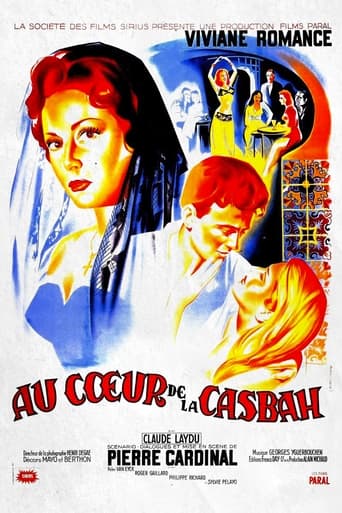
    Heart of the Casbah

    Heart of the Casbah

    7 1952 HD

    Maria-Pilar is the new wife of an Algerian gangster whom the police have just arrested. The son of a first marriage arrives in Algiers from which he has remained far away for a long time. His stepmother, charmed by the teenager, gradually experiences a devouring passion, against which Michel tries in vain to fight: he loves a young girl, Sylvie. Mad with jealousy, his stepmother singles him out for his father's vengeance by distorting the truth. Michel does not escape his father's fury, but when the woman's deception becomes known, Maria-Pilar is strangled to death.

    img
  • 1949
    imgMovies

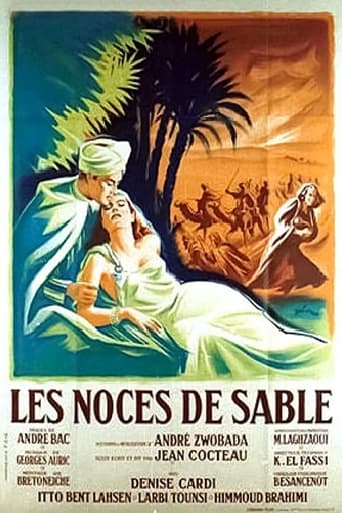
    Daughter of the Sands

    Daughter of the Sands

    10 1949 HD

    This Moroccan romance is a kind of Arab Tristan and Isolde: the heroine kills herself when she is convinced no one cares for her, the young nobleman she thought would love her is killed by a madwoman.

    img
  • 1982
    imgMovies

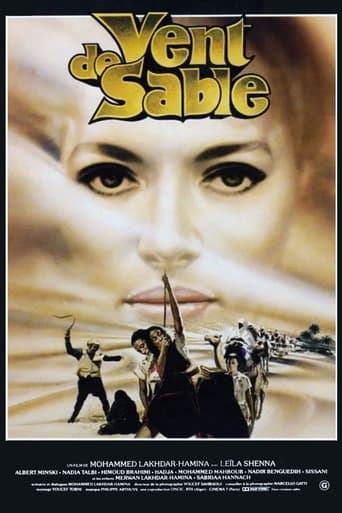
    Sandstorm

    Sandstorm

    10 1982 HD

    Seen right through the sandstorms that rack the lives of a tribe living on a desert oasis, is a subtle and not-so-subtle mistreatment of the female members of the tribe - tribal chiefs have the right to be the first to deflower virgins, and single or widowed mothers must walk a narrow line of behavior restrictions that do not apply to their male counterparts. Both genders, however, fight the brunt of the harsh desert winds together.

    img
  • 1971
    imgMovies

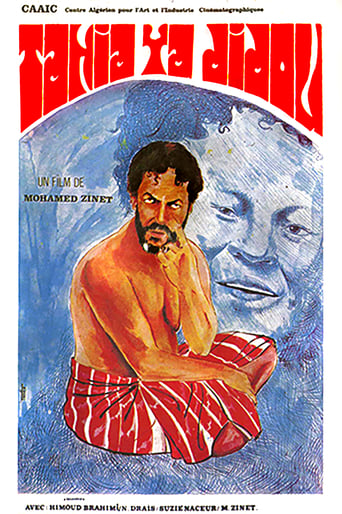
    Tahia Ya Didou !

    Tahia Ya Didou !

    8.2 1971 HD

    Originally commissioned by the city of Algiers to promote tourism, Mohamed Zinet’s Tahia ya Didou blends documentary with fiction to create a poetic, acerbic and rapturous portrait of the director’s native city. The camera travels freely, through the port, market, streets and cafés, capturing everyday people, some of whom recur frequently enough to seem like protagonists. The nominal plotline follows a French tourist couple’s leisurely visit to the city, the man having previously served in the army during the Algerian war. As they walk around, his comments betray his mindset’s racist colonial prejudices, while his wife reiterates asinine clichés. Their unhurried wandering is interrupted when he comes across a blind man and realises that he tortured him during his army service. The film is punctuated with punchy sequences that show a poet named Momo delivering verse as an elegy for Algiers.

    img
  • 1987
    imgMovies

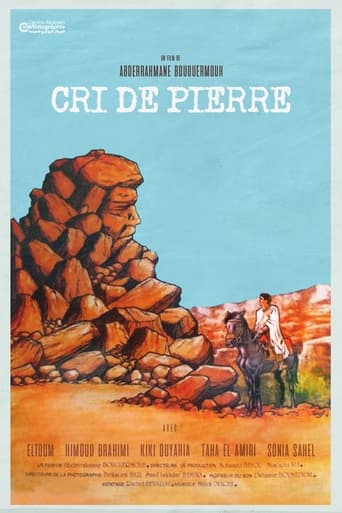
    Cry of Stone

    Cry of Stone

    10 1987 HD

    Led by Daoudi, a disenchanted architect, a group of Constantines return to their village in deep Algeria where a young man delivers to them words of boyish wisdom inherited from his deceased grandfather..

    img
  • 1991
    imgMovies

    Sons of the Earth

    Sons of the Earth

    10 1991 HD

    A drama set a little before the 1920s, in which scattered news, stories and rumors spread the presence of a new wealth, oil, leading to the suspicion that a great change was about to take place.

    img
  • 1978
    imgMovies

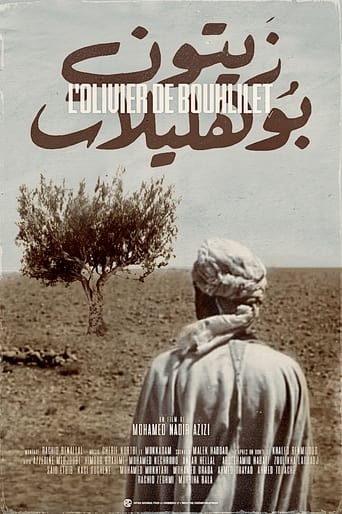
    The Olive Tree of Boul'hivet

    The Olive Tree of Boul'hivet

    10 1978 HD

    Belkacem, a young unemployed man living in the Saharan village of Boulhilet, is entrusted by Bouacha, an old dervish who came from nowhere, with the secret of the olive tree, the only lush tree and true mystery in this stone desert. After water supply works, modern life bursts into the village. Belkacem, ill-prepared for this situation, confuses dream and reality. Believing he has killed his rival who loves his beloved, he flees the village after donning the clothes of the dervish, whose gait he now imitates.

    img
  • 1981
    imgMovies

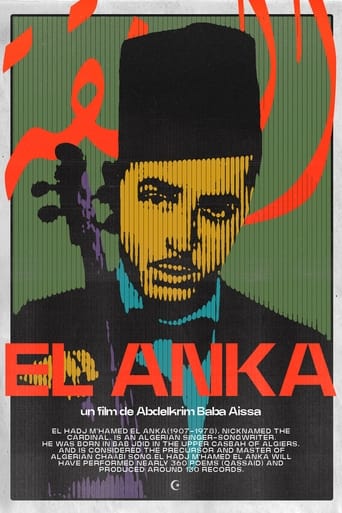
    El Anka

    El Anka

    10 1981 HD

    1/4 - In 1925, the young M’hamed El Anka replaced his master Nador at short notice. He realizes that he is far from mastering all the instruments of his art and begins a self-taught training program in Oud, the Arabic language, and religious singing in the hadra of Sidi Abderrahmane. 2/4 - In 1932, the young El Anka released 10 45 rpm records in Paris, including the first song from his composition "L'Exil". He is gradually “lightening” the Andalusian heritage. He made the pilgrimage to Mecca and wrote the famous song "El Mendouza". 3/4 - The 40s and 50s will confirm the maturity of the master, who consolidates the constituent elements of what is today called Chaâbi music. In the midst of the national liberation struggle, El Hadj M'hamed El Anka triumphs with the song "Youm El Djemâa". 4/4 - In 1962, El Anka sang of independence: "El hamdou lilah, mabqach listaâmar fi bledna". Activist, poet and musicologist Bachir Hadj Ali explains the artist’s exceptional style.

    img
  • 1989
    imgMovies

    Le Clandestin

    Le Clandestin

    9.5 1989 HD

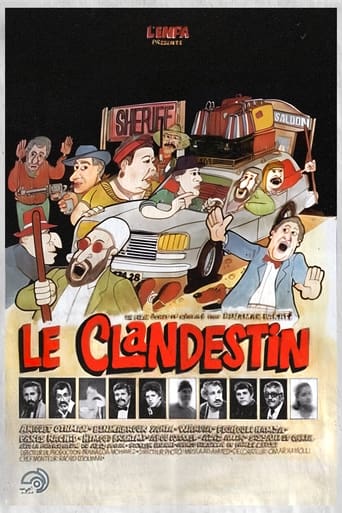
    Nine people with Abdullah Le Clandestin (Illegal Taxi), in one car, on the way to Algiers.

    img
  • 1952
    imgMovies

    The Desert Divers

    The Desert Divers

    10 1952 HD

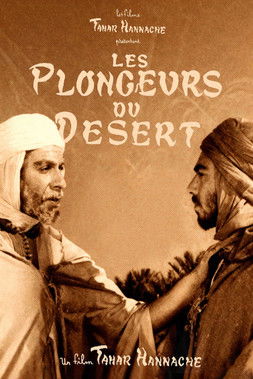
    Les Plongeurs Du Désert, directed by Tahar Hannache in 1952, is considered the first entirely Algerian fiction film. It tells the story of the inhabitants of an oasis whose well has dried up. The village elder, Sheikh Messaoud, calls upon the renowned desert divers, artisans specializing in clearing sand- and silt-filled wells, to restore access to the vital water for the community. After their intervention, the water begins to flow again, bringing relief to the oasis and its inhabitants. The film depicts the contrast between the traditional techniques of the divers, embodied by Sheikh Ali and his son Mansour, and the arrival of modernity, represented by the machine that ultimately replaces their craft. This story symbolizes the marginalization of local knowledge in the face of technological progress and the social injustice of the colonial era.

    img
  • 1971
    imgMovies

    Tahia Ya Didou !

    Tahia Ya Didou !

    8.2 1971 HD

    Originally commissioned by the city of Algiers to promote tourism, Mohamed Zinet’s Tahia ya Didou blends documentary with fiction to create a poetic, acerbic and rapturous portrait of the director’s native city. The camera travels freely, through the port, market, streets and cafés, capturing everyday people, some of whom recur frequently enough to seem like protagonists. The nominal plotline follows a French tourist couple’s leisurely visit to the city, the man having previously served in the army during the Algerian war. As they walk around, his comments betray his mindset’s racist colonial prejudices, while his wife reiterates asinine clichés. Their unhurried wandering is interrupted when he comes across a blind man and realises that he tortured him during his army service. The film is punctuated with punchy sequences that show a poet named Momo delivering verse as an elegy for Algiers.

    img
  • 1971
    imgMovies

    Tahia Ya Didou !

    Tahia Ya Didou !

    8.2 1971 HD

    Originally commissioned by the city of Algiers to promote tourism, Mohamed Zinet’s Tahia ya Didou blends documentary with fiction to create a poetic, acerbic and rapturous portrait of the director’s native city. The camera travels freely, through the port, market, streets and cafés, capturing everyday people, some of whom recur frequently enough to seem like protagonists. The nominal plotline follows a French tourist couple’s leisurely visit to the city, the man having previously served in the army during the Algerian war. As they walk around, his comments betray his mindset’s racist colonial prejudices, while his wife reiterates asinine clichés. Their unhurried wandering is interrupted when he comes across a blind man and realises that he tortured him during his army service. The film is punctuated with punchy sequences that show a poet named Momo delivering verse as an elegy for Algiers.

    img