Élisabeth Badinter

Élisabeth Badinter

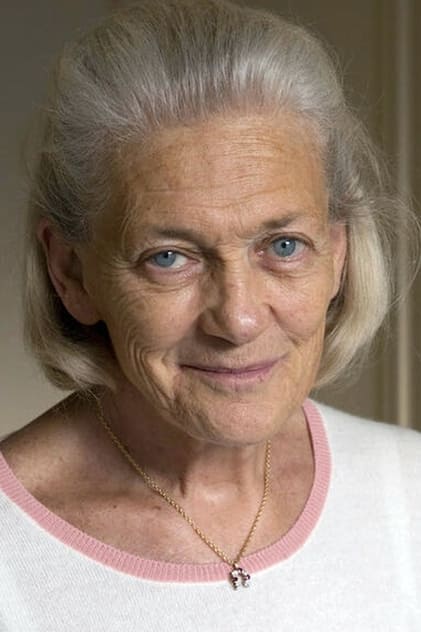
Élisabeth Badinter (née Bleustein-Blanchet; 5 March 1944) is a French philosopher, author and historian. She is best known for her philosophical treatises on feminism and women's role in society. She is an advocate of liberal feminism and women migrant workers' rights in France. Badinter is described as having a commitment to Enlightenment rationalism and universalism. She advocates for a "moderate feminism". A 2010 Marianne news magazine poll named her France's "most influential intellectual", primarily on the basis of her books on women's rights and motherhood. Badinter is the largest shareholder of Publicis Groupe, a multinational advertising and public relations company, and the chairwoman of its supervisory board. She received these shares in an inheritance from her father, Marcel Bleustein-Blanchet, who founded the company. According to Forbes, she is one of the wealthiest French citizens with a fortune of around US$1.8 billion in 2012. Badinter was born in Boulogne-Billancourt to Sophie Vaillant and Marcel Bleustein-Blanchet, founder of Publicis. Sophie Vaillant was the granddaughter of Édouard Vaillant, a French political leader and social activist. Elizabeth’s mother was raised as a Roman Catholic in a middle class upbringing, and later converted to Judaism following her marriage. She raised Élisabeth in the Jewish faith. Elisabeth and her two sisters were raised by parents who believed in the equality of the sexes. She received her secondary education from L'école alsacienne, a private school in Paris. During adolescence, Badinter read Simone de Beauvoir's the Second Sex, which profoundly influenced her views, inspiring her pursuit of a doctorate in philosophy at Sorbonne University. She is a specialist in French history of the Age of Enlightenment. After her studies, Badinter taught at the École Polytechnique. Her first book titled, L'Amour en plus, was published in 1980 and raises the question of whether maternal love is an exclusively natural instinct or a tendency reinforced in the cultural context, in which the behaviour of motherly affection is expected. In her critical work, L'un est l'autre, published in 1987, Badinter reflects upon the complementarities of masculine and feminine traits in gendered identities and the conflicts that arise when these complementarities are subjected to oppression. Badinter concludes that a new era of gendered resemblances will lead to a change in gender identities and a revolution of moral values. Her 2003 treatise, La fausse route, addresses misandry and victimisation of women by French contemporary feminists. "The systematic denial of women's power and violence, the constant portrayal of women as oppressed and therefore innocent is deepening the crevasses of a divided humanity: the victims of masculine oppression on one side and the almighty executioners on the other." She criticizes essentialists within the feminist movement, arguing that, "Man is not the enemy." ... Source: Article "Élisabeth Badinter" from Wikipedia in English, licensed under CC-BY-SA 3.0.

  • Title: Élisabeth Badinter
  • Popularity: 0.1489
  • Known For: Acting
  • Birthday: 1945-03-05
  • Place of Birth: Boulogne-Billancourt, Seine [now Hauts-de-Seine], France
  • Homepage:
  • Also Known As: Elisabeth Bleustein-Blanchet
img

Élisabeth Badinter Movies

  • 2022
    imgMovies

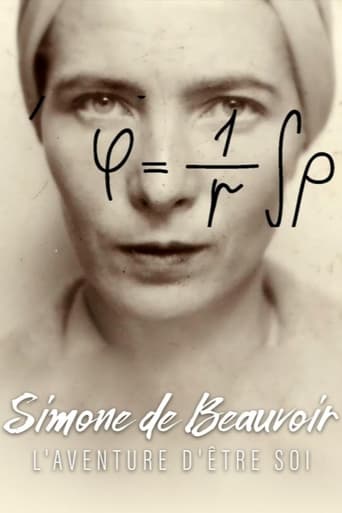
    Beauvoir, l'aventure d'être soi

    Beauvoir, l'aventure d'être soi

    8.3 2022 HD

    img
  • 2022
    imgMovies

    Racisé.e.s : Une histoire franco-américaine

    Racisé.e.s : Une histoire franco-américaine

    3.5 2022 HD

    Within a few years, France has witnessed the emergence of a new perspective on society, identity, and race, leading to the creation of an unprecedented lexicon that contradicts the principles of French-style universalism. These days, terms such as "white privilege", "intersectionality", "cancel culture", and the adjective "racialised" are defining a new relationship between minorities, differences, and society, especially among the younger generation. What is the origin of this vocabulary? What does 'wokism' mean? What is the origin of its adoption in France? Is it an opportunity? Or a threat? Is this an unfortunate implementation of a model not our own? This documentary delves into the origins and consequences of a phenomenon that is no longer trivial through archive footage and insights from prestigious contributors, analysts, and witnesses.

    img
  • 2019
    imgMovies

    Voltaire ou la liberté de penser

    Voltaire ou la liberté de penser

    1 2019 HD

    img
  • 2015
    imgMovies

    Je suis Charlie

    Je suis Charlie

    6.6 2015 HD

    This new documentary by the father-and-son directing team of Daniel and Emmanuel Leconte pays tribute to the 11 journalists of the French satirical magazine Charlie Hebdo who were killed in the January 2015 attack by radical Islamic extremists.

    img
  • 2015
    imgMovies

    Milk

    Milk

    7.5 2015 HD

    Through an intimate and artistic lens, yet investigative and political, Milk brings a universal focus on the politics, commercialization and controversies surrounding birth and infant feeding over the canvas of stunningly beautiful visuals and poignant voices from around the globe.

    img
  • 2015
    imgMovies

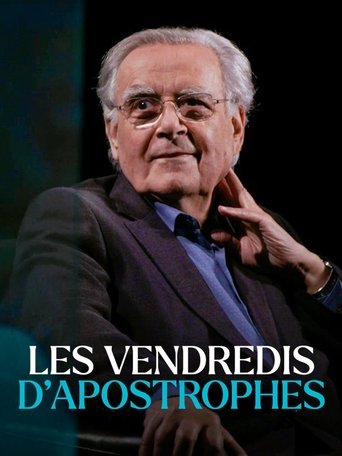
    Les vendredis d'Apostrophes

    Les vendredis d'Apostrophes

    6 2015 HD

    Hours and historical meetings, Pierre Assouline has composed an anthology of the best extracts presented in the form of a primer, which he had commented on by a surprised Bernard Pivot.

    img
  • 1999
    imgMovies

    Muttertier - Muttermensch

    Muttertier - Muttermensch

    1 1999 HD

    Lucy, who is already human-like, claims that the first humans were mothers: The mother built a nest to secure the child when it became too heavy to carry. This is how she invented the house. She penetrated the dense branches with her voice to maintain contact with the child. That's how she invented language. Today, Lucy shakes her head and asks: "How did you let yourself be dragged down like that?".

    img
  • 2008
    imgMovies

    It's Hard Being Loved by Jerks

    It's Hard Being Loved by Jerks

    6.8 2008 HD

    The murder of Dutch filmmaker Theo van Gogh by an Islamic extremist in 2004, followed by the publishing of twelve satirical cartoons depicting the prophet Mohammed that was commissioned for the Danish newspaper Jyllands-Posten, provides the incendiary framework for Daniel Leconte's provocative documentary, It's Hard Being Loved by Jerks.

    img
  • 2024
    imgMovies

    Trouble in Paradise – The Myth of Motherhood

    Trouble in Paradise – The Myth of Motherhood

    5 2024 HD

    Maternity is instinctive or is it a social construction? How can a period surrounded by expectations of happiness and achievement be, at the same time, such an anticlimax, so exhausting and melancholy? A director-mother talks to other mothers about the maternal instinct, guilt and loneliness, reflecting on the complexities and riches of maternity.

    img
  • 2003
    imgMovies

    Profession féministe?

    Profession féministe?

    1 2003 HD

    For Sophie Jeaneau, feminists today are disconnected from reality. Where have the great battles of the 1970s gone? A funny and provocative journey into the world of feminists.

    img
  • 2007
    imgMovies

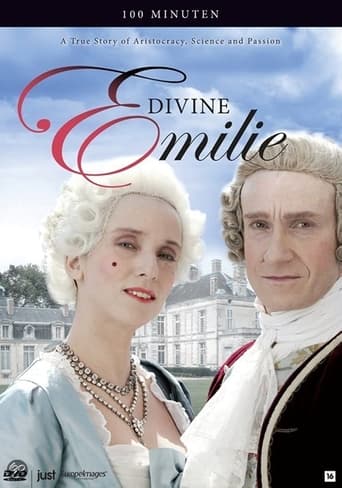
    Divine Émilie

    Divine Émilie

    2 2007 HD

    The life of Émilie du Châtelet, mathematician and physicist during the Enlightenment.

    img
  • 1975
    imgS E

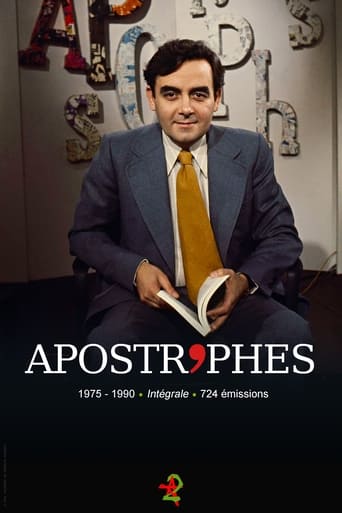
    Apostrophes

    Apostrophes

    9 1975 HD

    Apostrophes was a live, weekly, literary, prime-time, talk show on French television created and hosted by Bernard Pivot. It ran for fifteen years (724 episodes) from January 10, 1975, to June 22, 1990, and was one of the most watched shows on French television (around 6 million regular viewers). It was broadcast on Friday nights on the channel France 2 (which was called "Antenne 2" from 1975 to 1992). The hourlong show was devoted to books, authors and literature. The format varied between one-on-one interviews with a single author and open discussions between four or five authors.

    img