

John Barton
- Title: John Barton
- Popularity: 0.7277
- Known For: Directing
- Birthday:
- Place of Birth:
- Homepage:
- Also Known As:
 Movies
7 2003 HD
Major film and television stars re-enact famous scenes from the plays of William Shakespeare .
 Movies
8.5 1965 HD
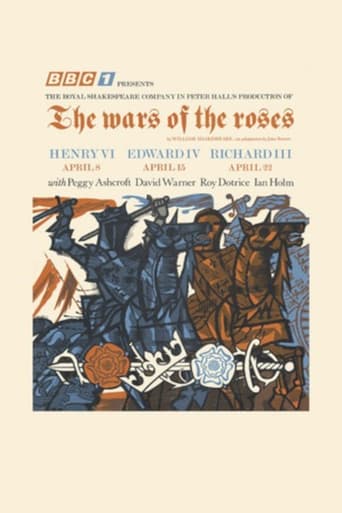
A 1965 BBC adaptation of William Shakespeare's first historical tetralogy (1 Henry VI, 2 Henry VI, 3 Henry VI and Richard III), which deals with the conflict between the House of Lancaster and the House of York over the throne of England, a conflict known as the Wars of the Roses. It was based on the 1963 theatre adaptation by John Barton, and directed by Peter Hall for the Royal Shakespeare Company.
Movies8.5 1965 HD
A 1965 BBC adaptation of William Shakespeare's first historical tetralogy (1 Henry VI, 2 Henry VI, 3 Henry VI and Richard III), which deals with the conflict between the House of Lancaster and the House of York over the throne of England, a conflict known as the Wars of the Roses. It was based on the 1963 theatre adaptation by John Barton, and directed by Peter Hall for the Royal Shakespeare Company.
Movies1 1968 HD
An adaptation directed by Claude Whatham for the BBC's Theatre 625 slot. Essentially a recording of John Barton's acclaimed Royal Shakespeare Company production starring Catherine Lacey (the Countess), Ian Richardson (Bertram), Lynn Farleigh (Helen), Clive Swift (Parolles) and Sebastian Shaw (the King), it was broadcast on 3 June 1968.
 S1 E9
S1 E910 1984 HD
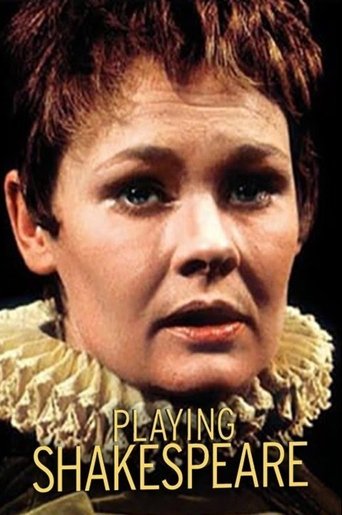
John Barton holds a master class in how to play Shakespeare, using members of the RSC doing scenes, sonnets, and commentary as prime examples.
 S61 E1
8.6 1970 HD
Hallmark Hall of Fame is an anthology program on American television, sponsored by Hallmark Cards, a Kansas City based greeting card company. The longest-running primetime series in the history of television, it has a historically long run, beginning during 1951 and continuing into 2013. From 1954 onward, all of its productions have been shown in color, although color television video productions were extremely rare in 1954. Many television movies have been shown on the program since its debut, though the program began with live telecasts of dramas and then changed to videotaped productions before finally changing to filmed ones. The series has received eighty Emmy Awards, twenty-four Christopher Awards, eleven Peabody Awards, nine Golden Globes, and four Humanitas Prizes. Once a common practice in American television, it is the last remaining television program such that the title includes the name of the sponsor. Unlike other long-running TV series still on the air, it differs in that it broadcasts only occasionally and not on a weekly broadcast programming schedule.
S1 E910 1970 HD
John Barton holds a master class in how to play Shakespeare, using members of the RSC doing scenes, sonnets, and commentary as prime examples.
 S5 E27
7.2 1970 HD
Theatre 625 is a British television drama anthology series, produced by the BBC and transmitted on BBC2 from 1964 to 1968. It was one of the first regular programmes in the line-up of the channel, and the title referred to its production and transmission being in the higher-definition 625-line format, which only BBC2 used at the time.
S5 E277.2 1970 HD
Theatre 625 is a British television drama anthology series, produced by the BBC and transmitted on BBC2 from 1964 to 1968. It was one of the first regular programmes in the line-up of the channel, and the title referred to its production and transmission being in the higher-definition 625-line format, which only BBC2 used at the time.
 S1 E3
S1 E39 1970 HD
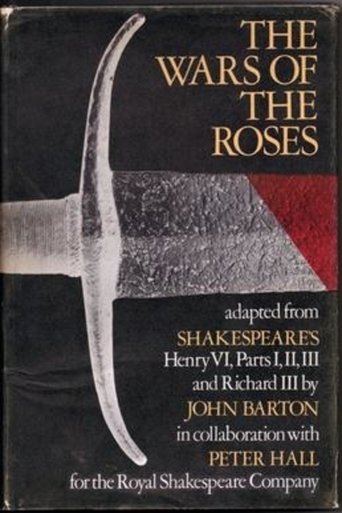
The Wars of the Roses was a 1963 theatrical adaptation of William Shakespeare's first historical tetralogy (1 Henry VI, 2 Henry VI, 3 Henry VI & Richard III), which deals with the conflict between the House of Lancaster & the House of York over the throne of England, a conflict known as the Wars of the Roses. The plays were adapted by John Barton, and directed by Barton himself & Peter Hall at the Royal Shakespeare Theatre. The plays were heavily politicized, with Barton and Hall allowing numerous contemporaneous events of the early 1960s to inform their adaptation. The production was a huge critical & commercial success, and is generally regarded as revitalizing the reputation of the Henry VI plays in the modern theatre. Many critics feel The Wars of the Roses set a standard for future productions of the tetralogy which has yet to be surpassed. The 1965 broadcast was so successful that they were shown again, as 11 episodes, each 50 minutes long, in 1966.
S1 E39 1970 HD
The Wars of the Roses was a 1963 theatrical adaptation of William Shakespeare's first historical tetralogy (1 Henry VI, 2 Henry VI, 3 Henry VI & Richard III), which deals with the conflict between the House of Lancaster & the House of York over the throne of England, a conflict known as the Wars of the Roses. The plays were adapted by John Barton, and directed by Barton himself & Peter Hall at the Royal Shakespeare Theatre. The plays were heavily politicized, with Barton and Hall allowing numerous contemporaneous events of the early 1960s to inform their adaptation. The production was a huge critical & commercial success, and is generally regarded as revitalizing the reputation of the Henry VI plays in the modern theatre. Many critics feel The Wars of the Roses set a standard for future productions of the tetralogy which has yet to be surpassed. The 1965 broadcast was so successful that they were shown again, as 11 episodes, each 50 minutes long, in 1966.
S1 E39 1970 HD
The Wars of the Roses was a 1963 theatrical adaptation of William Shakespeare's first historical tetralogy (1 Henry VI, 2 Henry VI, 3 Henry VI & Richard III), which deals with the conflict between the House of Lancaster & the House of York over the throne of England, a conflict known as the Wars of the Roses. The plays were adapted by John Barton, and directed by Barton himself & Peter Hall at the Royal Shakespeare Theatre. The plays were heavily politicized, with Barton and Hall allowing numerous contemporaneous events of the early 1960s to inform their adaptation. The production was a huge critical & commercial success, and is generally regarded as revitalizing the reputation of the Henry VI plays in the modern theatre. Many critics feel The Wars of the Roses set a standard for future productions of the tetralogy which has yet to be surpassed. The 1965 broadcast was so successful that they were shown again, as 11 episodes, each 50 minutes long, in 1966.