Peter Kubelka

Peter Kubelka

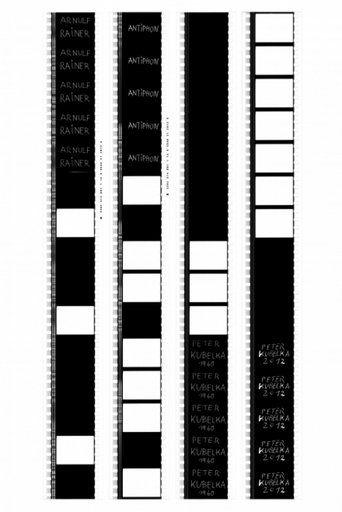
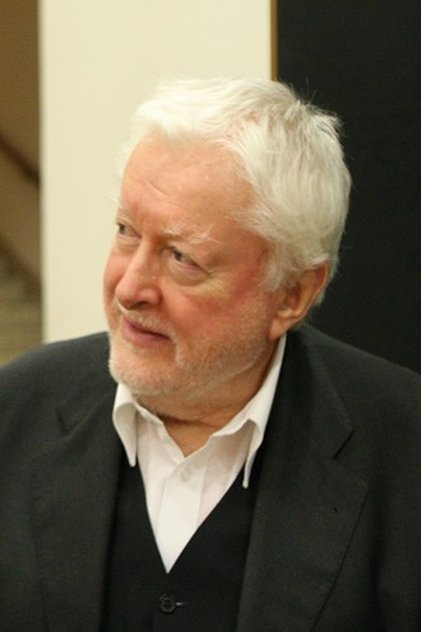
Peter Kubelka (born 23 March 1934 in Vienna, Austria) is an Austrian experimental filmmaker, architect, musician, curator and lecturer. His films are primarily short experiments in linking seemingly disparate sound and images. He is best known for his 1966 avant-garde classic Unsere Afrikareise (Our Trip to Africa). Kubelka made 16mm films, mostly shorts, and is known for his 1960 film Arnulf Rainer, a "flicker film" which alternates black and clear film that is projected to create a "flicker" effect. Kubelka also designed the Anthology Film Archives custom film screening space in the 1970s in New York. The theater had highly raked (tiered) seating with a cowel over each seat and visual barriers between each seat so that the audience member was totally isolated visually from other patrons. The theater was painted black and the seating was covered in black velvet. The only light in the room between film showings came from a spotlight aimed at the screen, thus ensuring that the only light in the room came from the screen. The design is illustrative of the purist aesthetic of the Avant Garde film movement of that era. Description above from the Wikipedia article Peter Kubelka, licensed under CC-BY-SA, full list of contributors on Wikipedia.​

  • Title: Peter Kubelka
  • Popularity: 0.1363
  • Known For: Directing
  • Birthday: 1934-03-23
  • Place of Birth: Wien, Austria
  • Homepage:
  • Also Known As:
img

Peter Kubelka Movies

  • 2020
    imgMovies

    Cinema Austria, the first 112 Years

    Cinema Austria, the first 112 Years

    5.2 2020 HD

    This historical and analytical documentary draws attention to the background of the roots of "New Austrian Cinema" and presents Austria as a film country to be taken seriously. The audience gets to see rare early works by well-known filmmakers as well as shots of landscapes that served as a source of inspiration and locations that have produced important Austrian films since the end of the 19th century.

    img
  • 2005
    imgMovies

    Restoring 'Entuziazm'

    Restoring 'Entuziazm'

    1 2005 HD

    A documentary on the restoration of Dziga Vertov's Entuziazm: Simfoniya Donbassa (1931).

    img
  • 2011
    imgMovies

    Free Radicals: A History of Experimental Film

    Free Radicals: A History of Experimental Film

    6.7 2011 HD

    Experimental filmmaker Pip Chodorov traces the course of experimental film in America, taking the very personal point of view of someone who grew up as part of the experimental film community.

    img
  • 1985
    imgMovies

    Home Movies 1971-81

    Home Movies 1971-81

    1 1985 HD

    Home movies shot on Super 8mm by W+B Hein over 10 years.

    img
  • 1978
    imgMovies

    Four Shadows

    Four Shadows

    7 1978 HD

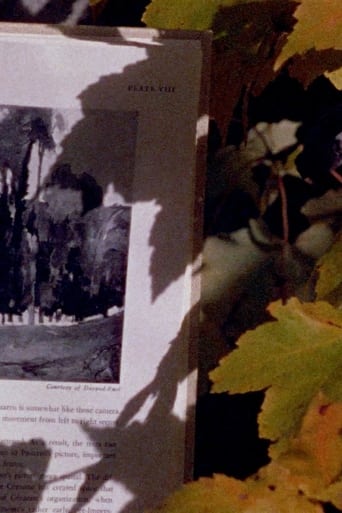
    Four four-minute image sections and four four-minute sound sections are linked in all combinations of the sound sections with each of the image sections. This established affinities between each of the image sections to the others, and the sound sections to each other. The image sections are: surveyors measuring the land near my house as seen through an old window, a family of Siamang Gibbon apes in the Washington zoo, an industrial site, and a page turned from a book on Cézanne’s composition showing a diagram of his painting Mardi Gras, filmed against bright leaves. The sound sections are: a dramatic scene from Debussy’s opera “Pelléas et Mélisande”, a passage from William Wordworth’s autobiographical poem “The Prelude,” sounds from rowing on a lake at night, and the sounds of the apes vocalizing.

    img
  • 2007
    imgMovies

    365 Day Project

    365 Day Project

    10 2007 HD

    This exhibition focuses on Jonas Mekas’ 365 Day Project, a succession of films and videos in calendar form. Every day as of January 1st, 2007 and for an entire year, as indicated in the title, a large public (the artist's friends, as well as unknowns) were invited to view a diary of short films of various lengths (from one to twenty minutes) on the Internet. A movie was posted each day, adding to the previously posted pieces, resulting altogether in nearly thirty-eight hours of moving images.

    img
  • 1996
    imgMovies

    Reminiscences of a Journey to Lithuania

    Reminiscences of a Journey to Lithuania

    7 1996 HD

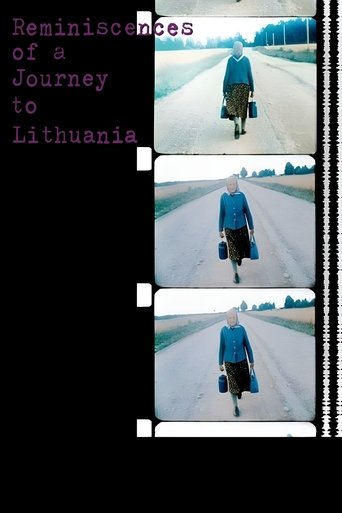
    Jonas Mekas weaves an elegiac diary film from his 1971–72 return to Lithuania, chronicling a visit to his birthplace of Semeniškiai after decades in exile. Blending personal memory with documentary observation, the film becomes both a portrait of homecoming and a meditation on displacement, family, and the passage of time.

    img
  • 2000
    imgMovies

    As I Was Moving Ahead, Occasionally I Saw Brief Glimpses of Beauty

    As I Was Moving Ahead, Occasionally I Saw Brief Glimpses of Beauty

    7.622 2000 HD

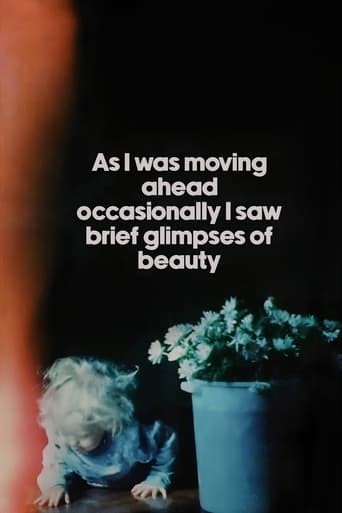
    A compilation of over 30 years of private home movie footage shot by Lithuanian-American avant-garde director Jonas Mekas, assembled by Mekas "purely by chance", without concern for chronological order.

    img
  • 1986
    imgMovies

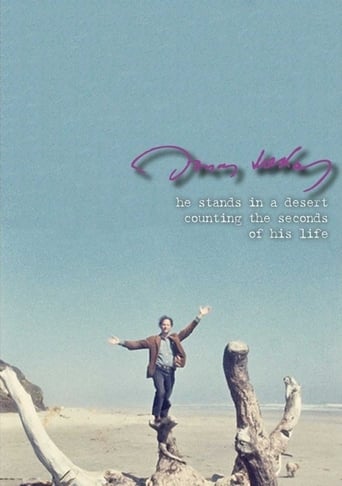
    He Stands in a Desert Counting the Seconds of His Life

    He Stands in a Desert Counting the Seconds of His Life

    8.2 1986 HD

    A film collage tracing the story of the lives, loves, and deaths within the artistic community surrounding Jonas Mekas.

    img
  • 2006
    imgMovies

    Notes on Marie Menken

    Notes on Marie Menken

    5.4 2006 HD

    A look at avant-garde filmmaker Marie Menken.

    img
  • 1997
    imgMovies

    Birth of a Nation

    Birth of a Nation

    6.3 1997 HD

    Jonas Mekas assembles 160 portraits, appearances, and fleeting sketches of underground and independent filmmakers captured between 1955 and 1996. Fast-paced and archival in spirit, the film celebrates the avant-garde as its own “nation of cinema,” a vital community existing outside the dominance of commercial film.

    img
  • 1967
    imgMovies

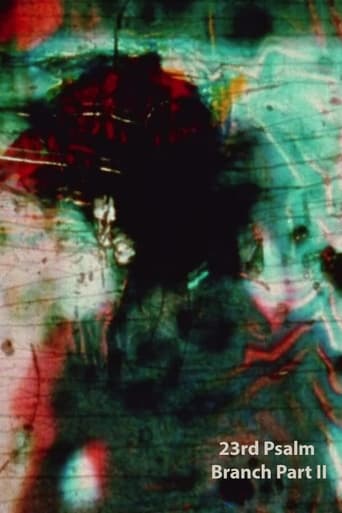
    23rd Psalm Branch: Part II

    23rd Psalm Branch: Part II

    5.6 1967 HD

    The second part: Brakhage’s layering of images spends less time with images of war, and begins filtering in scenes of Vienna and his home in Colorado. He sets up a comparison between “Kubelka’s Vienna” and his own.

    img
  • 2012
    imgMovies

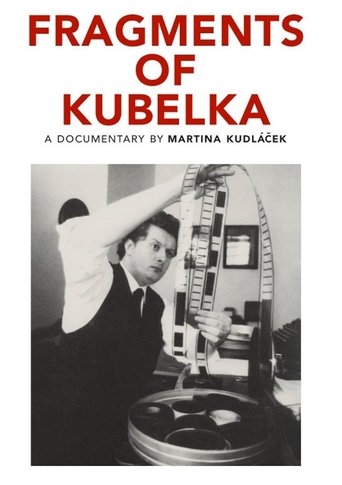
    Fragments of Kubelka

    Fragments of Kubelka

    5 2012 HD

    This epic documentary subtly introduces the complex worldview of iconic filmmaker and theoretician Peter Kubelka (born 1934, Vienna). While Kubelka’s radical and pioneering body of films is a highly condensed work of about an hour, focusing on the essence of cinema, his legendary lectures often unfold over many hours. These lectures on “what is cinema” and “cooking as an art form” are frequently illuminated by presentation of archaeological artefacts from Kubelka’s eclectic collection. He considers his ongoing collecting to be an expanded film practice which explores the evolution of humanity.
 Martina Kudláček has carefully woven an open-ended portrait which goes beyond the biographical to reveal fresh insights into the phenomenon of film.

    img
  • 1993
    imgMovies

    Peter Kubelka at the Library of Congress

    Peter Kubelka at the Library of Congress

    1 1993 HD

    An historic event: Peter Kubelka gives a lecture at the Library of Congress.

    img
  • 1978
    imgMovies

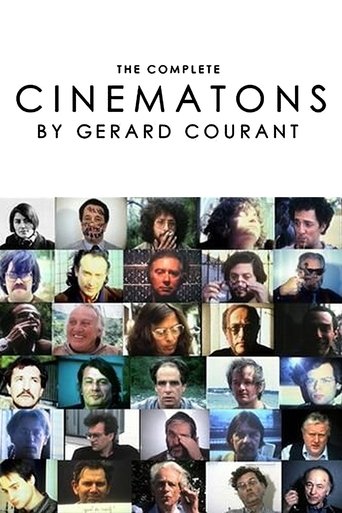
    Cinématon

    Cinématon

    4.3 1978 HD

    Cinématon is a 156-hour long experimental film by French director Gérard Courant. It was the longest film ever released until 2011. Composed over 36 years from 1978 until 2006, it consists of a series of over 2,821 silent vignettes (cinématons), each 3 minutes and 25 seconds long, of various celebrities, artists, journalists and friends of the director, each doing whatever they want for the allotted time. Subjects of the film include directors Barbet Schroeder, Nagisa Oshima, Volker Schlöndorff, Ken Loach, Benjamin Cuq, Youssef Chahine, Wim Wenders, Joseph Losey, Jean-Luc Godard, Samuel Fuller and Terry Gilliam, chess grandmaster Joël Lautier, and actors Roberto Benigni, Stéphane Audran, Julie Delpy and Lesley Chatterley. Gilliam is featured eating a 100-franc note, while Fuller smokes a cigar. Courant's favourite subject was a 7-month-old baby. The film was screened in its then-entirety in Avignon in November 2009 and was screened in Redondo Beach, CA on April 9, 2010.

    img
  • 2005
    imgMovies

    Scenes from the Life of Hermann Nitsch

    Scenes from the Life of Hermann Nitsch

    1 2005 HD

    A casual, personal portrait of Hermann Nitsch, made with footage I took over the many years of our friendship. Footage includes early performances in New York, images of Hermann shortly after the acquisition of the Prinzendorf monastery, which since has become his main space of activity. You also see Hermann with his Vienna, New York, and Napoli friends, Peter Kubelka, Raimund Abraham, Gunther Brus, George Maciunas, Giuseppe Morra, and others.

    img
  • 1979
    imgMovies

    Paradise Not Yet Lost

    Paradise Not Yet Lost

    1 1979 HD

    The film is arranged in six chronologically-ordered parts, each filmed in a different location during Oona's third year.

    img
  • 1968
    imgMovies

    Diaries, Notes, and Sketches

    Diaries, Notes, and Sketches

    7.4 1968 HD

    Also known as Walden, Jonas Mekas’s first diary film is a six-reel chronicle of his life in 1960s New York, interweaving moments with family, friends, lovers, and artistic idols. Blending everyday encounters with portraits of the avant-garde art scene, it forms an epic, personal meditation on community, creativity, and the passage of time.

    img
  • 2020
    imgMovies

    Tapes

    Tapes

    1 2020 HD

    The tapes in the program consist of some of Mekas’ earliest cassettes from the 1990s not long after he first began working with video as well as more recent mini-DV tapes from 2010s. The contents of the tapes have not been previously seen in their entirety. The footage provides rare insight into aspects of Mekas’ video-making practice, as well as his activities, thoughts, dreams, and concerns, especially during the later years of his life.

    img
  • 1984
    imgMovies

    Cinématon XXX

    Cinématon XXX

    1 1984 HD

    Reel 30 of Gérard Courant’s on-going Cinematon series.

    img
  • 2024
    imgMovies

    What Is Happening? Art in the Life of Gertie Fröhlich

    What Is Happening? Art in the Life of Gertie Fröhlich

    1 2024 HD

    n 2018, director Marieli Fröhlich initiated a documentary about her mother, the artist Gertie Fröhlich. The director interviews over 20 artists, friends, and former collaborators whose recollections unveil the themes and the controversy surrounding Gertie Fröhlich‘s status as an artist, uncovering her influence on the Post-War Vienna Avant-Garde starting in her early 20s. As the film unfolds, these contradictions come to a head: Is the existence of the most important Austrian post-war gallery, Galerie nächst St. Stephan, indebted to Gertie Fröhlich, or was she merely the good spirit and secretary? Was her retelling of Greek myths an analogy for her vision of a refreshed matriarchal psyche — a position of equal significance to manifestations and deterritorialization of the body by Austria’s feminist artists? - New Jersey Film Festival

    img
  • 2016
    imgMovies

    EXPRMNTL

    EXPRMNTL

    1 2016 HD

    Knokke, Belgium. A small mundane coastal town, home to the beau-monde. To compete with Venice and Cannes, the posh casino hosts the second ‘World Festival of Film and the Arts’ in 1949, organised in part by the Royal Cinematheque of Belgium. To celebrate cinema’s 50 year existence, they put together a side program showcasing the medium in all its shapes and forms: surrealist film, absolute film, dadaist films, abstract film,… The side program would soon become a festival in its own right: ‘EXPRMNTL’, dedicated to experimental cinema, and would become a mythical gathering of the avant-garde…

    img
  • 1966
    imgMovies

    Our Trip to Africa

    Our Trip to Africa

    5.767 1966 HD

    Originally commissioned by an Austrian couple in 1961 to photograph a travel diary documenting their wild game hunt, Kubelka shot three hours of film and recorded fourteen hours of audio. Over the next few years, Kubelka toiled in the editing bay, producing a work charged with intricate, ironic brutality.

    img
  • 1960
    imgMovies

    Arnulf Rainer

    Arnulf Rainer

    4.5 1960 HD

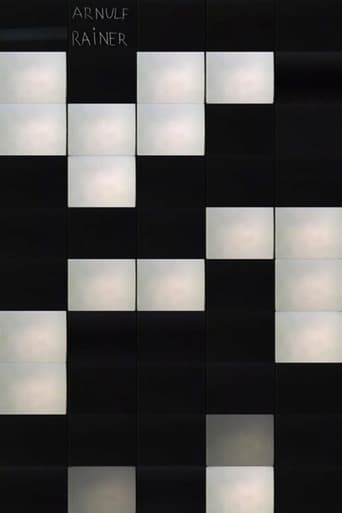
    An experimental film, the last in Peter Kubelka's trilogy of “metric films”. Each frame of Arnulf Rainer is composed of darkness or light and silence or sound.

    img
  • 1977
    imgMovies

    Pause!

    Pause!

    4.7 1977 HD

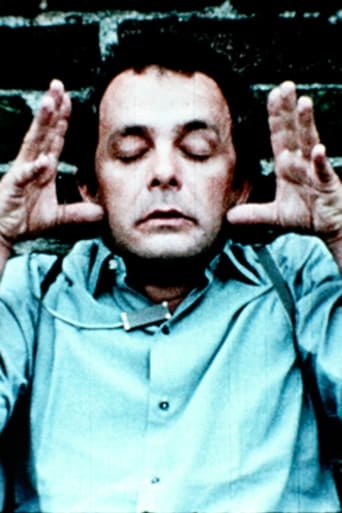
    Short film by Peter Kubelka. Arnulf Rainer contorts his mind and body before the camera.

    img
  • 1977
    imgMovies

    Pause!

    Pause!

    4.7 1977 HD

    Short film by Peter Kubelka. Arnulf Rainer contorts his mind and body before the camera.

    img
  • 1955
    imgMovies

    Mosaic in Trust

    Mosaic in Trust

    5.2 1955 HD

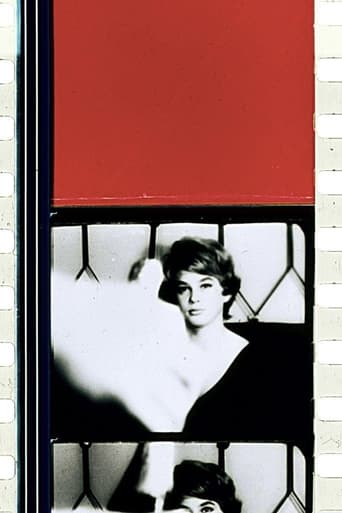
    In his first film work, Kubelka evokes episodes of flirtation, courtship, and break-ups, played out against a series of non-corresponding audio excerpts.

    img
  • 1957
    imgMovies

    Adebar

    Adebar

    4.6 1957 HD

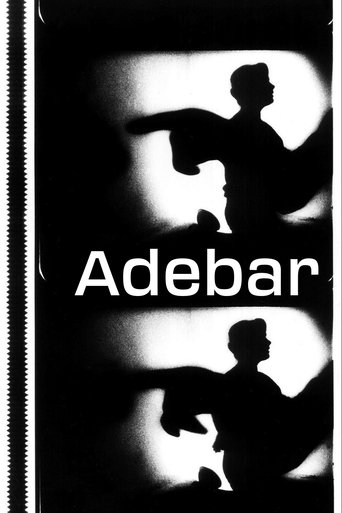
    Adebar is the first of Peter Kubelka's 'metric films', in which every element of the composition is precisely ordered and in relation to the gestalt. The film is made up of single units---13, 26 and 52 frames long---which are subjected to a complex rule-system, including a strict use of positive and negative space, that determines their structure within the film.

    img
  • 1958
    imgMovies

    Schwechater

    Schwechater

    4.8 1958 HD

    In 1957, Peter Kubelka was hired to make a short commercial for Schwechater beer. The beer company undoubtedly thought they were commissioning a film that would help them sell their beers; Kubelka had other ideas. He shot his film with a camera that did not even have a viewer, simply pointing it in the general direction of the action. He then took many months to edit his footage, while the company fumed and demanded a finished product. Finally he submitted a film, 90 seconds long, that featured extremely rapid cutting (cutting at the limits of most viewers' perception) between images washed out almost to the point of abstraction — in black-and-white positive and negative and with red tint — of dimly visible people drinking beer and of the froth of beer seen in a fully abstract pattern.

    img
  • 2004
    imgMovies

    Poetry and Truth

    Poetry and Truth

    7 2004 HD

    Discarded takes from advertising films are presented almost untouched, as documents that unwittingly offer valuable and humorous insights into the human condition.

    img
  • 1955
    imgMovies

    Mosaic in Trust

    Mosaic in Trust

    5.2 1955 HD

    In his first film work, Kubelka evokes episodes of flirtation, courtship, and break-ups, played out against a series of non-corresponding audio excerpts.

    img
  • 2012
    imgMovies

    Antiphon

    Antiphon

    1 2012 HD

    Antiphon is constituted by the same 4 basic elements of cinema, light and darkness, sound and silence, as is my film Arnulf Rainer but it has the opposite form. Negative becomes positive, positive becomes negative, silence becomes sound, sound becomes silence. - Peter Kubelka

    img
  • 2012
    imgMovies

    Monument Film

    Monument Film

    10 2012 HD

    Arnulf Rainer—every which way but loose.

    img
  • 1966
    imgMovies

    Our Trip to Africa

    Our Trip to Africa

    5.767 1966 HD

    Originally commissioned by an Austrian couple in 1961 to photograph a travel diary documenting their wild game hunt, Kubelka shot three hours of film and recorded fourteen hours of audio. Over the next few years, Kubelka toiled in the editing bay, producing a work charged with intricate, ironic brutality.

    img
  • 1955
    imgMovies

    Mosaic in Trust

    Mosaic in Trust

    5.2 1955 HD

    In his first film work, Kubelka evokes episodes of flirtation, courtship, and break-ups, played out against a series of non-corresponding audio excerpts.

    img
  • 2011
    imgMovies

    Film als Ereignis, Film als Sprache, Denken als Film

    Film als Ereignis, Film als Sprache, Denken als Film

    1 2011 HD

    img