José Sarney

José Sarney

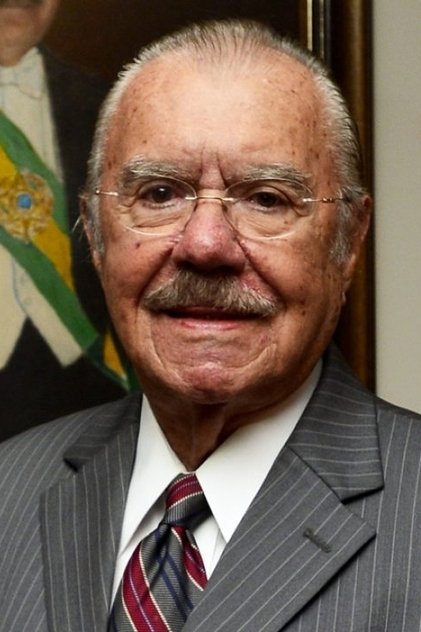
José Sarney de Araújo Costa (born José Ribamar Ferreira de Araújo Costa; 24 April 1930) is a Brazilian politician, lawyer, and writer who served as 31st president of Brazil from 1985 to 1990. He briefly served as the 20th vice president of Brazil for a month between April and May 1985. Sarney was a member of the Chamber of Deputies from 1955 until 1966 and of the Senate from 1971 until 1985. He was also the Governor of Maranhão from 1966 until 1970. During the Brazilian military dictatorship, Sarney affiliated himself with the government party, ARENA, becoming the president of the party in 1979. Sarney joined the dissenters, and was instrumental in the creation of the Liberal Front Party. Sarney ran for Vice-President on the ticket of Tancredo Neves of PMDB, formerly the opposition party to the military government. Neves won the presidential election, but fell ill and died before taking office, and Sarney became President. He started out his term with great popularity, but public opinion shifted with the Brazilian debt crisis and the failure of Plano Cruzado to abate chronic inflation. His government is seen today as disastrous and clientelism was widespread having longlasting consequences for the Brazilian Republic post military dictatorship. Following his presidency, Sarney resumed his senate career elected again in 1991 and serving until 2015. He also held the position of President of the Federal Senate three times following his presidency. At age 92, he is the oldest living former Brazilian president, and at the time of his retirement in 2015, had one of the longest congressional careers in Brazilian history. Born in Pinheiro, Maranhão, as José Ribamar Ferreira de Araújo Costa, he was the son of Sarney de Araújo Costa, a wealthy land-owner and sugarcane producer, and Kiola Ferreira. His family has origins in Viseu in Portugal. He attended Colégio Marista and the Licéu Maranhense before attending the Federal University of Maranhão. In 1953, he graduated from the federal university receiving his bachelor's degree in law. After his graduation, he launched a postmodernist literary journal titled A Ilha. In 1965 he legally adopted the name José Sarney de Araújo Costa, usually shortened to José Sarney, for electoral purposes. He was known as "Zé do Sarney", as in "José, son of Sarney". Sarney's father acquired the name after being born on a land owned by an Englishman named "Sir Ney". Sarney started his political career in the 1950s after becoming a replacement deputy and later as a federal deputy in 1955. He was a member of the centre-right National Democratic Union (União Democrática Nacional—UDN), aligned with the progressive wing of the party. He strongly supported so-called "Revolution of 1964", a military coup that overthrew leftist President João Goulart in 1964. After the military coup, Sarney followed most of the UDN into the National Renewal Alliance (ARENA), the political party of the military government. He was elected governor of the state of Maranhão in 1966, serving until 1971. He was then elected to the Brazilian Senate and became ARENA's president. ... Source: Article "José Sarney" from Wikipedia in English, licensed under CC-BY-SA 3.0.

  • Title: José Sarney
  • Popularity: 0.2356
  • Known For: Acting
  • Birthday: 1930-04-24
  • Place of Birth: Pinheiro, Maranhão, Brazil
  • Homepage:
  • Also Known As:
img

José Sarney Movies

  • 2021
    imgMovies

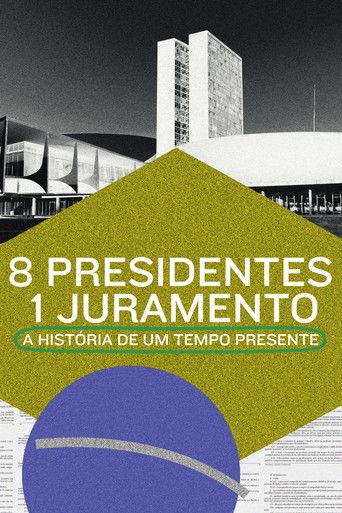
    8 Presidentes 1 Juramento: A História de um Tempo Presente

    8 Presidentes 1 Juramento: A História de um Tempo Presente

    8 2021 HD

    The movie is a collage and comentary of varied third party footage on news relating to each and every one of the eight Presidents of Brazil who took office since the end of the military government, from José Sarney to Jair Bolsonaro.

    img
  • 2013
    imgMovies

    O Brasil Deu Certo. E Agora?

    O Brasil Deu Certo. E Agora?

    4.8 2013 HD

    3 ex-presidents of Brazil, 12 ex-ministers of State, 7 ex-governors of the Central Bank, bank owners and finance specialists tell the Brazilian economic history and speculate about the present and the future of the country. 125 years ago Brazil was a poor country with slavery. 60 years ago 50% of Brazilians were illiterate. 25 years ago inflation rate reached 84% a month and 35% of the population was extremely poor. In 2013, Brazil ranks the seventh world's largest economy, inflation reached 5,4% a year, poverty was reduced to 12% and the country is looking forward to be wealthy. Will it happen? Agile cutting, simple language and smart graphic arts allow the answer to this and other questions to be interesting and available to all audiences.

    img
  • 2023
    imgMovies

    The Hijacking of Flight 375

    The Hijacking of Flight 375

    7.798 2023 HD

    Brazil, 1988. An unemployed tractor driver hijacks VASP flight 375 and orders commander Murilo to crash the plane on the Planalto Palace to kill the president - whom he considers guilty for the country's devastating economic crisis.

    img
  • 2019
    imgMovies

    Não Nasci para Deixar meus Olhos Perderem Tempo

    Não Nasci para Deixar meus Olhos Perderem Tempo

    1 2019 HD

    The fading of composer Zé Keti’s career. The sad portrait of Brazilian Congress closed in 1977. The pain of a mother who lost her 15-year old daughter run over by a car. The Brazilian Presidents since Castelo Branco. Characters and settings registered through the keen and sensitive perspective of photographer Orlando Brito, in a career spanning 50 years as a professional. From the political sidelines to the lives of Brazilians from the interior, Brito recalls experiences and discusses the role of the photographer and the pain of registering someone’s grief.

    img
  • 1966
    imgMovies

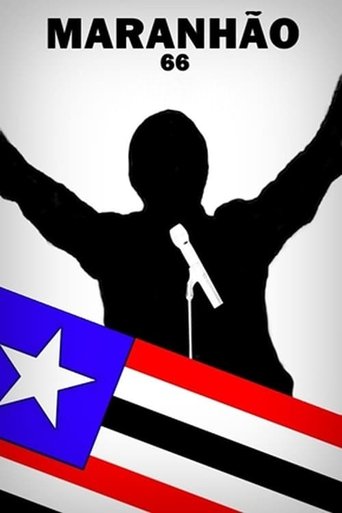
    Maranhão 66

    Maranhão 66

    6.7 1966 HD

    A report on Sarney's inauguration as the governor of the Maranhão state. His promises are heard alongside images of the grim reality.

    img
  • 2004
    imgMovies

    1964: 40 Years After

    1964: 40 Years After

    5 2004 HD

    Documentary that shows the events that culminated in the deposition of President João Goulart, on March 31, 1964, and the implementation of the military dictatorship in Brazil. Around 40 characters reveal behind the scenes and comment in detail on this important moment in Brazilian political history.

    img
  • 1985
    imgMovies

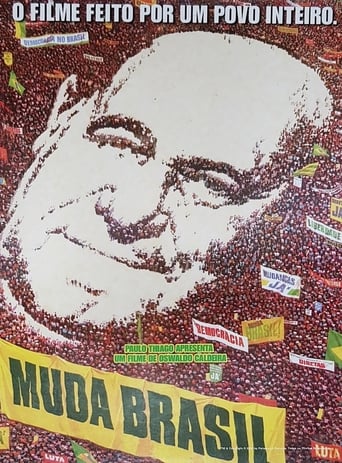
    Muda Brasil

    Muda Brasil

    1 1985 HD

    The documentary recalls the political reopening of the country, and narrates in detail the events that culminated in the election of Tancredo Neves as the first civilian president after 20 years of military dictatorship.

    img
  • 1987
    imgMovies

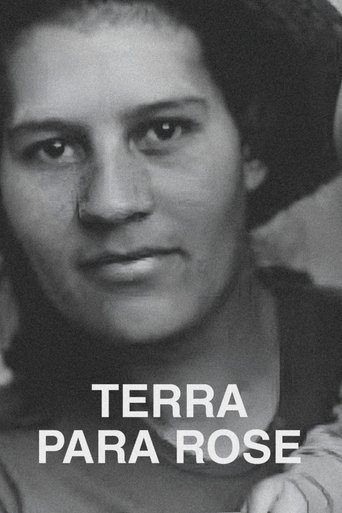
    Terra Para Rose

    Terra Para Rose

    5 1987 HD

    Documentary about the oppression of a group of a families of the MST, the Brazilian Landless Workers Movement, who invaded Anoni Farm, a farm in the state of Rio Grande do Sul, Brazil, in 1985, and Rose, a woman fighting for the right of owning a land and for elementary human rights, and mother of the first baby born in the camping site.

    img
  • 2005
    imgMovies

    João do Vale, Muita Gente Desconhece

    João do Vale, Muita Gente Desconhece

    1 2005 HD

    Latest images of the artist still alive, an unprecedented composition, testimonies of friends, family and icons of Brazilian culture.

    img
  • 2000
    imgMovies

    Glauber em Tempo - Redescobrindo o Brasil

    Glauber em Tempo - Redescobrindo o Brasil

    1 2000 HD

    img
  • 2007
    imgMovies

    Português - A Língua do Brasil

    Português - A Língua do Brasil

    1 2007 HD

    16 members from the Brazilian Academy of Letters share their views on the current situation of the portuguese language.

    img
  • 2019
    imgMovies

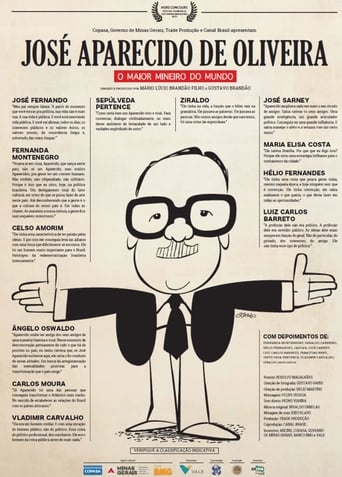
    José Aparecido de Oliveira – O Maior Mineiro do Mundo

    José Aparecido de Oliveira – O Maior Mineiro do Mundo

    1 2019 HD

    Documentary that chronicles the trajectory of the journalist, federal deputy, secretary of state, minister of state, governor and ambassador José Aparecido de Oliveira, who lived with the greatest authorities and personalities from the political, business and cultural circles in Brazil and the world.

    img
  • 1987
    imgMovies

    Brascuba

    Brascuba

    1 1987 HD

    img
  • 1970
    imgMovies

    Maio Oito Meia

    Maio Oito Meia

    1 1970 HD

    img
  • 2019
    imgMovies

    Letter Beyond the Walls

    Letter Beyond the Walls

    8.2 2019 HD

    Letter Beyond the Walls reconstructs the trajectory of HIV and AIDS with a focus on Brazil, through interviews with doctors, activists, patients and other actors, in addition to extensive archival material. From the initial panic to awareness campaigns, passing through the stigma imposed on people living with HIV, the documentary shows how society faced this epidemic in its deadliest phase over more than two decades. With this historical approach as its base, the film looks at the way HIV is viewed in today's society, revealing a picture of persistent misinformation and prejudice, which especially affects Brazil’s most historically vulnerable populations.

    img
  • 2022
    imgMovies

    Lobby do Batom

    Lobby do Batom

    1 2022 HD

    The most successful case of collective fight for women's rights in Brazil.

    img
  • 1993
    imgMovies

    Ulysses Cidadão

    Ulysses Cidadão

    1 1993 HD

    The life and work of deputy Ulysses Guimarães based on news reports, interviews and testimonies.

    img
  • 2004
    imgMovies

    Sousândrade - O Guesa Errante

    Sousândrade - O Guesa Errante

    1 2004 HD

    Documentary about the Brazilian poet Joaquim de Sousa Andrade.

    img
  • 2025
    imgMovies

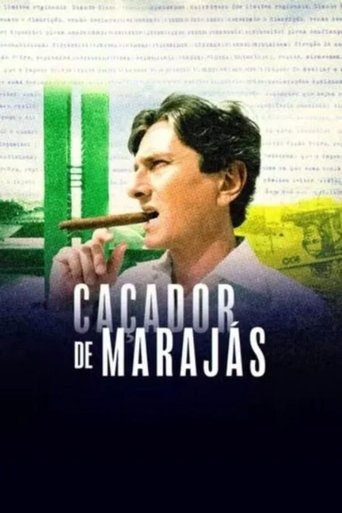
    Caçador de Marajás

    Caçador de Marajás

    9 2025 HD

    The documentary explores the rise and fall of Fernando Collor De Mello, the youngest person to become president in Brazil and the first history of impeachment of a president on the America continent.

    img
  • 2004
    imgMovies

    Master of the Sea

    Master of the Sea

    1 2004 HD

    The film tells the story of Cristório, a fisherman from Northeastern Brazilian state of Maranhão, who lost his young son when he was killed by jealous husband, during a folklore festival that celebrates the return of a ressurected bull, called Bumba-meu-boi. It is a journey to the heart of deepest Brazil, where it finds the dramatic soul of the Brazilian people.

    img
  • 2000
    imgS17 E1

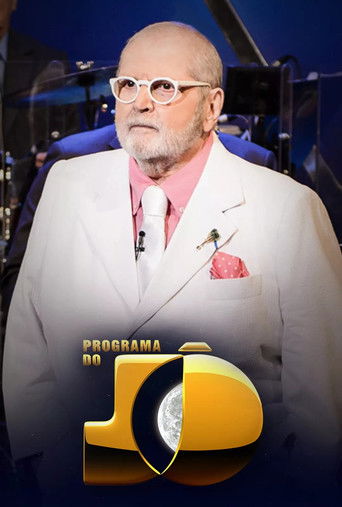
    Programa do Jô

    Programa do Jô

    8.2 2000 HD

    Programa do Jô is a Brazilian late-night talk show broadcast by Rede Globo since April 3, 2000. It is shown after the late-night news bulletin, Jornal da Globo. The program is hosted by Brazilian comedian, author and musician Jô Soares, and follows the format of American talk shows such as Late Show with David Letterman. It began its life as Jô Soares Onze e Meia in 1988 on SBT. Following Jô Soares' return to Globo in 2000, the show was renamed as Programa do Jô, retaining the same format and late-night time slot. The show usually features interviews with 3 guests and a live musical performance. Usually, if one of the guests is a musician or band, they return to perform at the end of the show. There are also occasions when the first guest stays on to continue the interview past the first commercial break, in which case the show only features 2 interviews. In most cases, the interviews are longer and more in-depth than those on Letterman's show.

    img
  • 1972
    imgS20 E8

    Le Grand Échiquier

    Le Grand Échiquier

    8 1972 HD

    img
  • 1982
    imgS13 E2

    Champs-Elysées

    Champs-Elysées

    6.3 1982 HD

    img
  • 2025
    imgS1 E7

    Fernando Collor: The Maharajah Hunter

    Fernando Collor: The Maharajah Hunter

    9 2025 HD

    The rise and fall of Fernando Collor de Mello, Brazil's youngest president and the first president in the Americas to be impeached.

    img