

Kim Tae-il
- Title: Kim Tae-il
- Popularity: 0.6313
- Known For: Directing
- Birthday: 1963-01-01
- Place of Birth:
- Homepage:
- Also Known As: 김태일, Tae-il Kim
 Movies
1 2005 HD
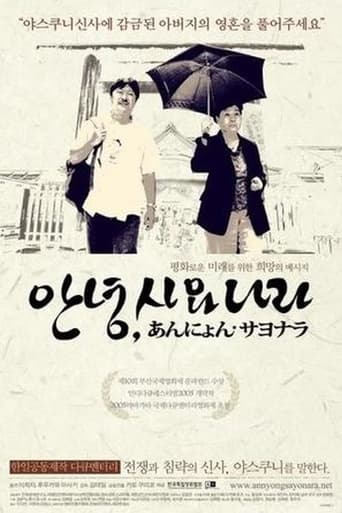
This joint Korean-Japanese production follows a Korean woman, Lee Ha-jong, as she searches for her father's remains. He - like tens of thousands of other Koreans - was forced into the Japanese military, and subsequently killed during WW2. She is joined by a Japanese man, seeking reconciliation between his country's military past, and the countries victimized by that history. The filmmakers portray both sides of a still highly emotional debate that centers around the enshrinement of soldiers at the Yasukuni Shrine, and Lee's lawsuit to prevent her father from being enshrined there. As Lee visits Japan and the controversial Yasukuni Shrine, she confronts - and is confronted by a wall of nationalistic pride that might be compared to neo-Nazis defending the righteousness of The Reich. This is contrasted with her meeting and working with Japanese peace activists, who deplore their countries' militaristic past, and seek to heal the wounds with her neighbors.
 Movies
1 2022 HD
All the family members willingly went through hardship travelling numerous cities and countries including Gwangju city, Cambodia, Bosnia, and Palestine, and the young children became grown-ups doing so. There were joy, anger, sorrow, and pleasure in their journey as they chose to visit the troubled parts of the world with not enough money.
 Movies
1 2017 HD
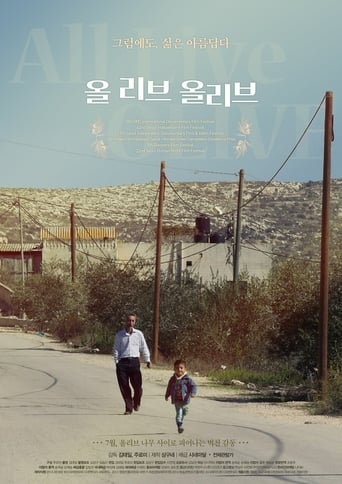
Wizdan lives in the rural village of Sebastia. Both their parents are olive farmers. With the expansion of Israeli settlements, Wizdan's and Nidal's parents are losing their farmland, but the problem is not theirs alone. But many Palestinians have been living in refugee camps for almost 70 years, and the fourth generation of refugees are growing up in refugee camps today. They struggle to guard their land despite repeated humiliation, and the film focuses on the resistance of such ordinary Palestinians including Wizdan's family.
 Movies
1 2011 HD
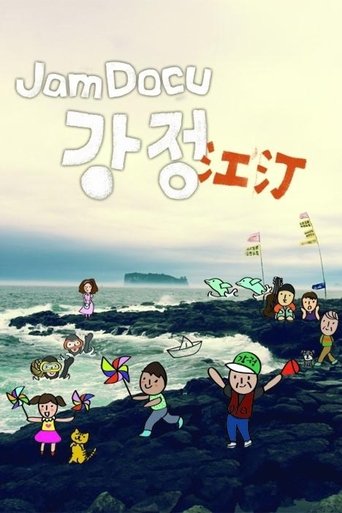
Gangjeong Village, located at the southernmost part of Jeju Island's Seogwipo City, is in the true sense a 'breathtaking land of water.' In this film, eight directors independently yet collaboratively orchestrate a clever and humorous "mission" at this place where the groundwork for building a naval military base is in progress.
 Movies
1 2011 HD
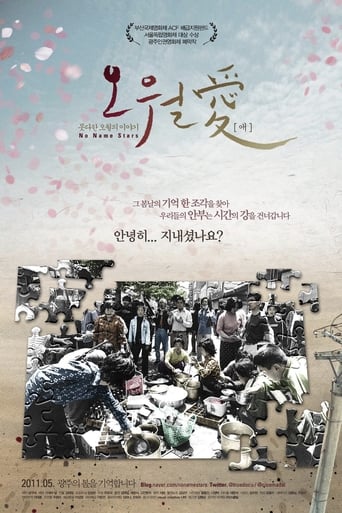
This year is the 30th anniversary of the Gwangju Democratization Movement. Though the country commemorates the event as the official historical records, it does not include any 'real' accounts of the people who experienced it firsthand. The students who were part of the movement; the female vendors who made rice balls for the students; the female high school students cooked at the government building; now, past their middle age, they live as ordinary citizens in Gwangju city. How is the event remembered by these people?
 Movies
1 2017 HD
 Movies
1 2025 HD
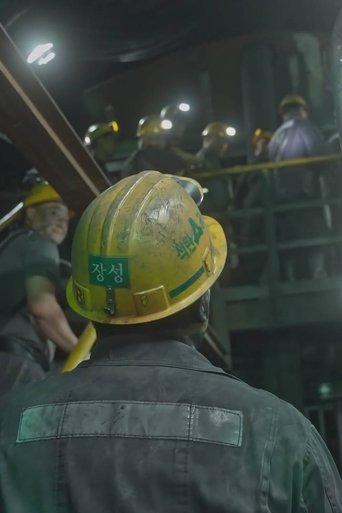
The film opens with the words of Taebaek's last miners: "I had to earn a living." These are the first words, spoken over the shot of a cage descending endlessly into a mine—the place that the miners of the soon-to-be-closed Jangseong Mining Station call hell. They began working out of poverty, needing to make a living somehow. Though they planned to quit after three days, they ended up staying for over 30 years, and in all that time, they saw nothing good.
Movies1 2017 HD
Wizdan lives in the rural village of Sebastia. Both their parents are olive farmers. With the expansion of Israeli settlements, Wizdan's and Nidal's parents are losing their farmland, but the problem is not theirs alone. But many Palestinians have been living in refugee camps for almost 70 years, and the fourth generation of refugees are growing up in refugee camps today. They struggle to guard their land despite repeated humiliation, and the film focuses on the resistance of such ordinary Palestinians including Wizdan's family.
Movies1 2011 HD
This year is the 30th anniversary of the Gwangju Democratization Movement. Though the country commemorates the event as the official historical records, it does not include any 'real' accounts of the people who experienced it firsthand. The students who were part of the movement; the female vendors who made rice balls for the students; the female high school students cooked at the government building; now, past their middle age, they live as ordinary citizens in Gwangju city. How is the event remembered by these people?
Movies1 2011 HD
This year is the 30th anniversary of the Gwangju Democratization Movement. Though the country commemorates the event as the official historical records, it does not include any 'real' accounts of the people who experienced it firsthand. The students who were part of the movement; the female vendors who made rice balls for the students; the female high school students cooked at the government building; now, past their middle age, they live as ordinary citizens in Gwangju city. How is the event remembered by these people?
Movies1 2005 HD
This joint Korean-Japanese production follows a Korean woman, Lee Ha-jong, as she searches for her father's remains. He - like tens of thousands of other Koreans - was forced into the Japanese military, and subsequently killed during WW2. She is joined by a Japanese man, seeking reconciliation between his country's military past, and the countries victimized by that history. The filmmakers portray both sides of a still highly emotional debate that centers around the enshrinement of soldiers at the Yasukuni Shrine, and Lee's lawsuit to prevent her father from being enshrined there. As Lee visits Japan and the controversial Yasukuni Shrine, she confronts - and is confronted by a wall of nationalistic pride that might be compared to neo-Nazis defending the righteousness of The Reich. This is contrasted with her meeting and working with Japanese peace activists, who deplore their countries' militaristic past, and seek to heal the wounds with her neighbors.